ABOUT SELECTING IDEAL CULTURES
Ideal cultures are those with as much as possible of these traits combined: Speed and veracity of colonization, quickness until fruiting initiation, where pins prefer to form, abort likelihood, number of pin sites and number of pins at each, size of those fruits which combined totals "yield", and great potency.
Additionally we may observe and select by physical appearance of fruits, physical appearance of mycelium, apparent susceptibility to contamination, sporulation if much or little/none is desired, dense or hollow stems, and one may even go so far as taste although this is mostly left to the realm of culturing edible species.
It is my opinion that those factors be considered in the following order of priority:
1. YIELD. This is not concerned simply with a large first flush but the total yield per a spent substrate.
2. POTENCY, which truly is yield also. If two cultures yield the same but one is more potent that one has actually yielded more; a hugely-yielding strain with no potency is still useless. This is equal to raw yield in importance but is the last factor that can be determined.
3. LOCATION OF PIN SITES makes the difference between clean or hasslesome harvests. It can also effect abort rate (side-pins are more likely to abort) and thus yield.
4. SPEED OF FRUITING. There's no point in waiting around for a culture that hogs fruiting chamber space for extra time without any other advantage. This is especially important when it comes to fruiting directly from whole grains, where most cultures seem to take their sweet time. That factor refers to nutrition tolerance. Another significant factor is CO2 tolerance... if possible, we want strains to pin fast even within enclosure.
5. NUMBER OF PINS PER PIN SITE / FRUIT SIZE. Yield comes from the interaction of these two factors. We want as high as possible of a value of both simultaneously. The most numerous field of pins may abort or grow to be small fruits; the largest of fruits may grow alone. The best is likely to produce a great number of medium-sized fruits, so dense clusters of well-sized mushrooms is ideal.
6. EASE OF RELEASE AT HARVEST. For me this has become very important. My favorite champion cultures are those that pluck easily from their substrate with little effort. They do not call for cutting in order to avoid damaging the substrate which is especially important for keeping casing layers healthy and full.
7. ABORT LIKELIHOOD. This is a lower priority simply because it is only potentially of significant relevance. If a certain culture forms 3 times as many pins as another, a 50% abort rate is not actually a problem as there are still more pins capable of growing fully.
8. SPEED OF COLONIZATION. It's very nice to have a quickly-colonizing culture, but for sterile work it comes to make little difference as long as the culture isn't simply slow. Fortunately strong fruiting strains are often plenty quick. I care about this one a lot solely due to pickiness, and this method allows for speed to be selected for first.
9. SUSCEPTIBILITY TO CONTAMINATION. Some cultures can be early giving way to Trich & company before the sub's potential is fully used, but this has more to do with the health and nutrition of the cake
10. PHYSICAL APPEARANCE OF FRUITS AND/OR MYCELIUM. Mushrooms have many different likeable aesthetics, with many novel possibilities. Some people care for more consistently rhizomorphic mycelium.
11. SPORULATION. Good cultures should be heavy sporulators to keep the line going, but a strong fruiter that drops few/no spores is very nice and tidy to have also, and should be considered preferable for long-term storage and wide use.
Few strains are prolific pinners. Not all strains fruit sizably. Most strains will pin in side-pin microclimates if they're available, and many will even pin against the sides and create side-pin microclimates anyway.
Of the few top-yielding strains, not all will stubbornly fruit on the intended fruiting surface like we want them to. Of the strains that will hardily fruit on the intended surface instead of side-pin, not all will give top yield. The rare strains found to be ideal in both will still need to be compared for potency!
Once such a specimen is found it should be kept carefully for years and years to come!
The younger our cultures, the better. Mycelium's "age" regards how much it has expanded since germination & mating, multiplying towards and through senescence where performance gradually then drastically drops. By minimizing the expansion required to find and isolate the genes we want & keeping un-expanded samples of them on reserve we can use & expand a single strain seemingly endlessly.
Such culture practise done well results in master cultures that can be spread world-wide and be eaten by millions of people, such as the famous Shiitake75 and so many others, shown again and again to colonize most veraciously and yield most prolifically.
Just a little setup, patient observation, careful transfers, and in this case some small-scale testing, makes for unimaginable differences in ease and effectiveness for lifetimes.
__________________________________________________________________
There are many ways to go about finding a strong fruiting strain of Cubensis, but removing factors of randomness and guessing greatly reduces the sterile work, materials, energy, and space involved. "Cloning" mushroom pins/fruits by taking a sample to agar is a great shortcut to reducing mycelium one handles to fruiting strains.
However this has usually involved expanding to colonize a fruiting substrate and expanding as a mushroom, capable of re-expanding but naturally expecting to die and decay, so it's possible that mycelium has expanded very much by the time the genetics are isolated. Further, depending on the fruiting scenario the clone is taken from we may be somewhat blind to the quality of our selections.
We can set-up conditions where the strongest genetics are as much more likely to shine out from the mix as possible.
Cloning from a "bulk" substrate grow may be a great quick & easy shortcut to finding cultures trusted to do well in those scenarios again. However the amount of expansion involved prior is the most extreme, and there are some aspects to it that can bring haze to identifying and selecting ideal genes.
In brief, RATIO OF FRUITING SURFACE AREA TO SUBSTRATE SIZE.
This 'value' greatly effects the concentration of fruits and thus our ability to clearly perceive how densely-fruiting the genetics we're seeing really are.
Consider two divisions of a single substrate, each with the same 9 square inches in fruiting surface area. One is 1 inch deep and the other is 3 inches deep, colonized with the same culture. The 3-inch-deep substrate has 3x the fruiting capacity, but the greater number/size of fruits it will attempt to grow have but the same surface area to fruit from.
Thus a mycelium genetic that will grow sparse single fruits may nonetheless grow side-to-side on the deeper sub in what appears to be clusters and quite a prolific amount, while the more shallow substrate more easily shows in macro what the genetic's solitary fruiting traits really are.
There are more factors as well that are not explained or understood as simply but are no less at work. Large substrates, particularly bulk substrates dense with water mass, tend to grow larger mushrooms. Nobody can complain about a good yield of big guys, and my early clones were almost always such specimens, but I've come to accept that this is a poor way to select cultures. They tend towards a few hard-to-dehydrate giants that would suit 4 people instead of plentiful quick-drying clusters of numerous fruits. (I also believe smaller fruits to be capable of a slightly greater potency.)
As I gradually moved over to my current grow style as shown in the seed & plastic tek I realized that my somewhat-prized cultures, mostly clones from rye/coir sub mixes, were simply not as close to top-notch as I thought. For some of the reasons named above, they appeared about equally prolific on bulk substrate but their differences and limited adequacies were made quite clear from the small & efficient substrates I then used instead.
So I'm here to advise using very small substrates to both find & test the capabilities of our selected genes!
With my grow tek this naturally comes to manifest as what I affectionately call…
Edited by Violet (12/19/17 04:30 PM)
|


 Threaded
 Previous
 Index
Index Next
Next


 Some of these posts are very old and might contain outdated information. You may wish to search for newer posts instead.
 Violet


 OregonMushys


 Edit
Edit  Reply
Reply 


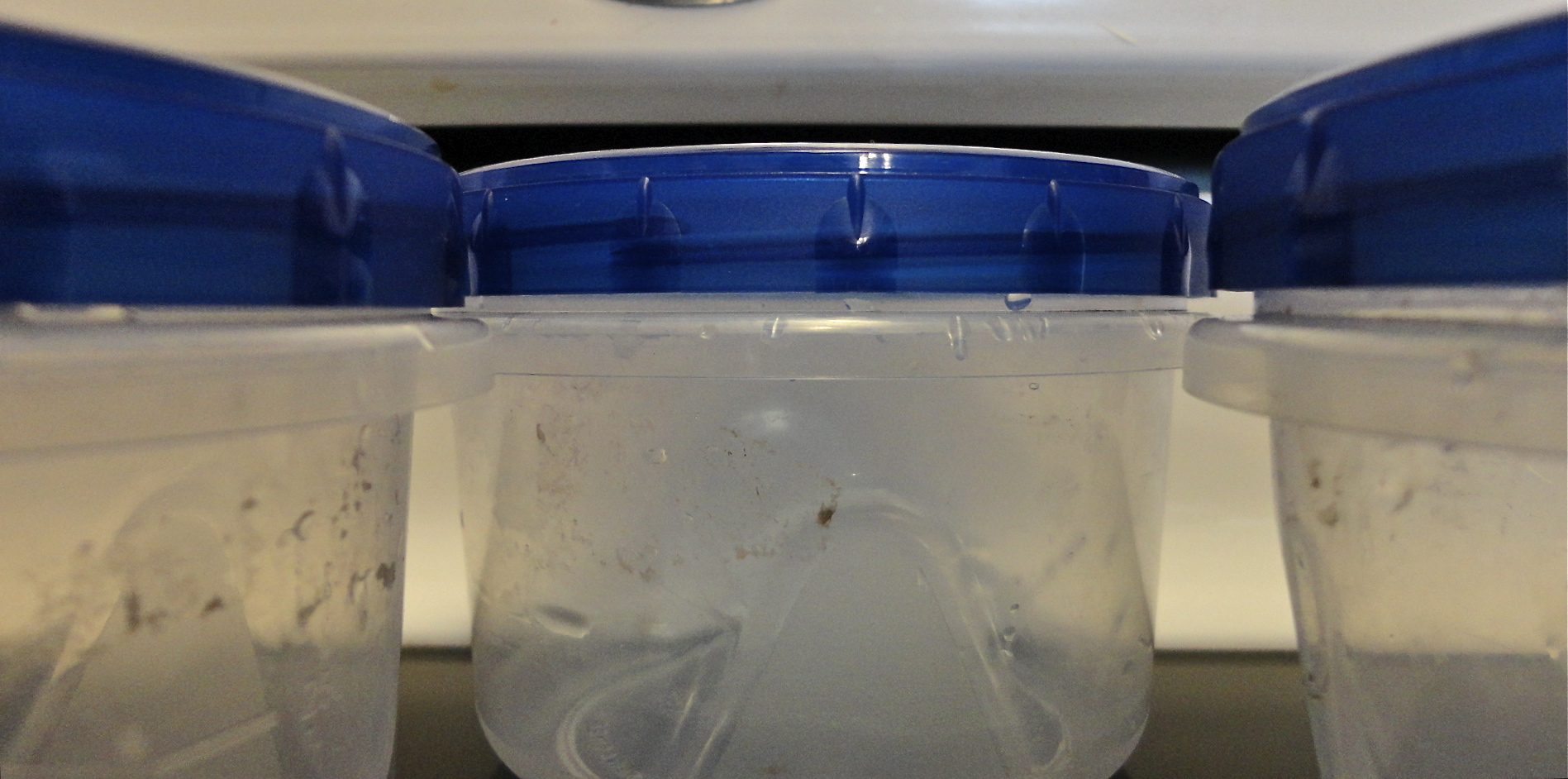


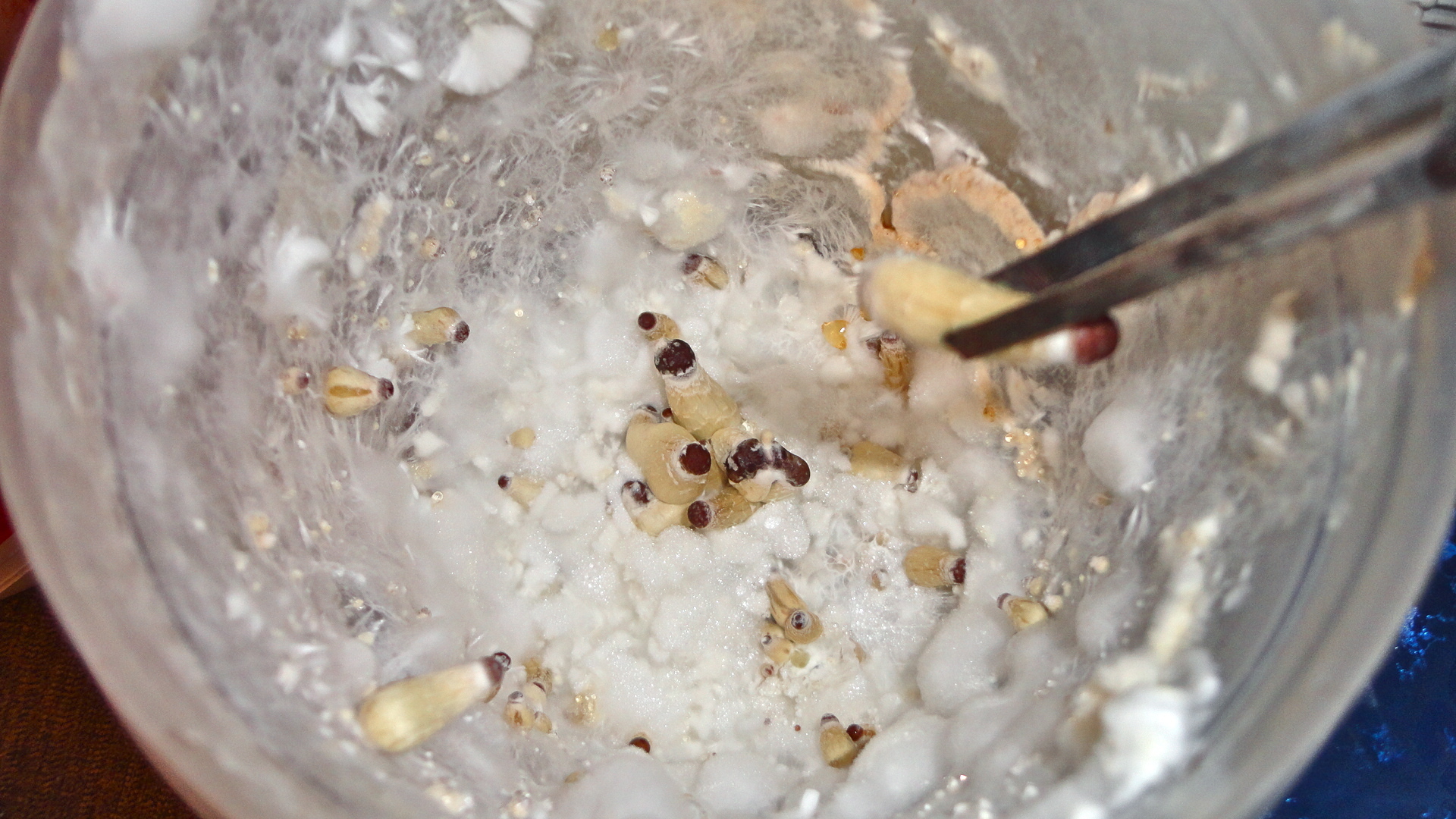

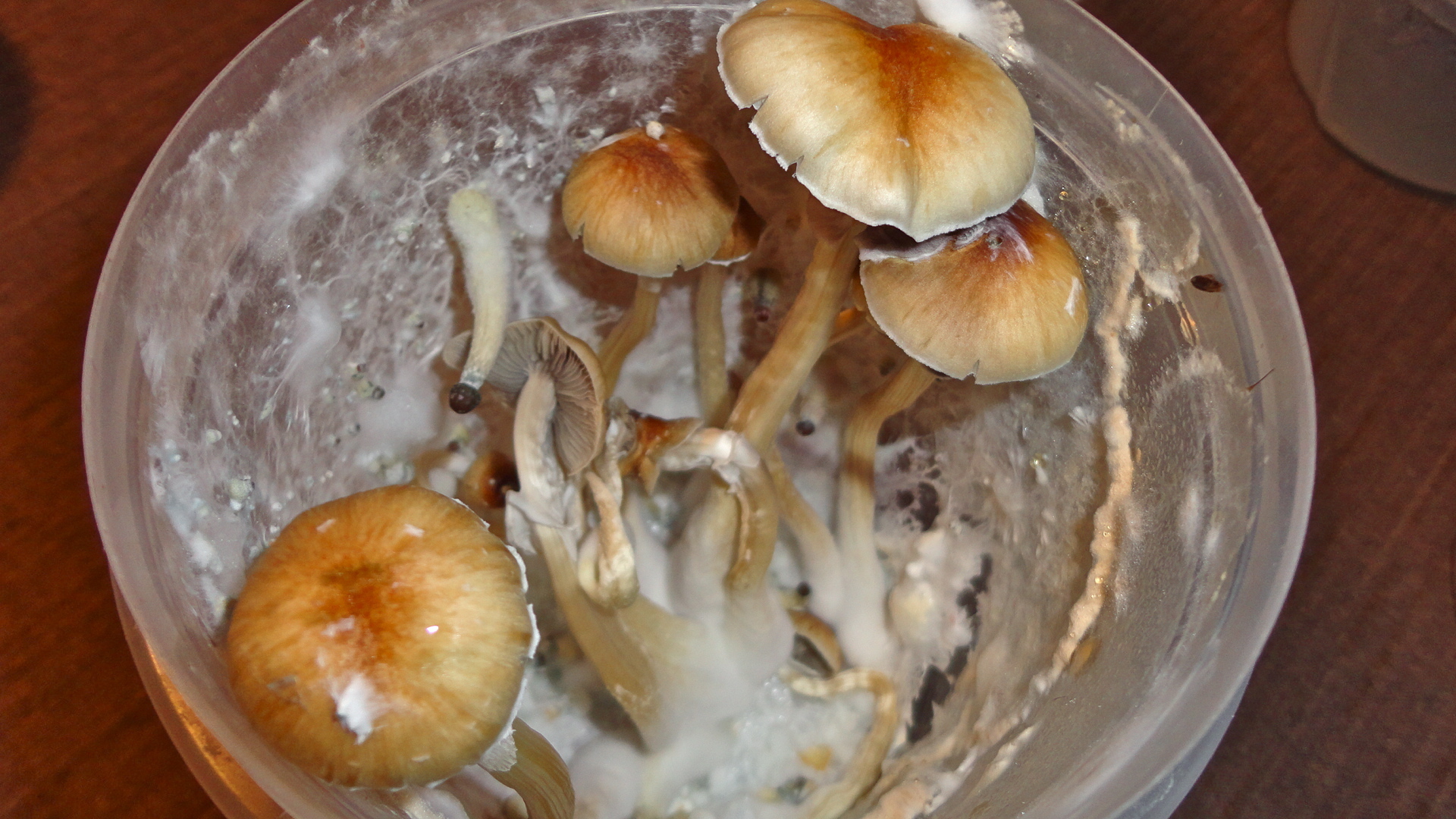


 i been takin 'sterile prints' from invitro fruiting containers for a bit now, just never got around to post it. You should filter the lids of the printing containers to eliminate all that moisture on the foil.


 dimitri211
 exan
exan
 1 2 all )
 Myco-420
 bassplayer74