Terence Mckenna on 2012.
Here is a theory derived from Terence McKenna called Timewave Zero.
Quote:
See, in the west we have inherited from Newton what is called the idea of pure duration, which is simply that time is sort of a place where things are placed so that they don't all happen at once; in other words, it's used as quality-less, it's an abstraction. In fact, I think when we carry out a complete analysis of time, I think what we're going to discover is that like matter, time is composed of elemental, discrete types. All matter, organic and inorganic matter, is composed of 104, 108 elements ... there's some argument. Time, on the other hand, is thought to be this featureless, qualityless medium, but as we experience it, as living feeling creatures, time has qualities. There are times when everything seems to go right, and times when everything seems to go wrong.
Well, so in looking at this, I created a vocabulary ... actually I borrowed it from Alfred North Whitehead ... but I think I'm on to something which science has missed, and it's this; it's that the universe, or human life or an empire or an ecosystem, any large scale or small scale process, can be looked at as a dynamic struggle between two qualities which I call habit and novelty. And I think they're pretty self-explanatory. Habit is simply repetition of established patterns, conservation, holding back what has already been achieved into a system, and novelty is the chance-taking, the exploratory, the new, the never-before-seen. And these two qualities — habit and novelty — are locked in all situations in a kind of struggle. But the good news is that if you look at large scales of time, novelty is winning, and this is the point that I have been so concerned to make that I think science has overlooked. If you look back through the history of the human race, or life on this planet, or of the solar system and the galaxy, as you go backward in time, things become more simple, more basic. So turning that on its head, we can say that as you come towards the present things become more novel, more complex. So I've taken this as a universal law, affecting historical processes, biological processes and astrophysical processes.
Nature produces and conserves novelty, and what I mean by that, as the universe cools the original cloud of electron plasma, eventually atomic systems form, as it further cools molecular systems, then long-chain polymers, then non-nucleated primitive DNA-containing life, later complex life, multi-cellular life, and this is a principle that reaches right up to our dear selves. And notice, it's working across all scales of being. This is something that is as true of human societies as it is of termite populations or populations of atoms in a chemical system. Nature conserves, prefers novelty. And the interesting thing about an idea like this is that it stands the existentialism of modern philosophy on its head ... you know, what modern, atheistic existentialism says is that we're a cosmic accident and damn lucky to be here, and any meaning you get out of the situation, you're simply conferring. I say, no ... by looking deeply into the structure of nature, we can discover that novelty is what nature produces and conserves, and if that represents a universal value system, then the human world that we find today with our technologies and our complex societies represents the greatest novelty so far achieved, and suddenly you have a basis for an ethic — that which advances novelty is good, that which retards it is to be looked at very carefully.
It's an exponentially accelerating process which leads to a kind of end-of-the-world scenario which has led a lot of people to place me out with the squirrels because I'm saying that this process of novelty is now moving so quickly that within our own lifetimes it is going to accelerate essentially to such an intensity that we will be experiencing more novelty in a few weeks or days than we've previously experienced in the whole life of the cosmos.
what makes me, I hope, a little different from some of the other prophets in the marketplace is, I've got a formal mathematical theory that ... you know, I mentioned habit and novelty, this dualistic flow ... well, because it is a dualistic flow, it can be portrayed like the ebb and flow of the price of a stock, or something like that, in other words, it can be portrayed as a line graph. So I've written computer programs which produce what I call novelty waves ... in other words, a time-scale wave that pictures the ebb and flow of novelty. And by fitting known historical and paleontological and geological data into these waves at different scales, I was finally able to discern a best fit. But the conclusion that it led to was very startling to me, which is: this ultimate novelty, this transcendental object at the end of time, isn't millennia in the future, it is in fact slated to collide with historical necessity some time in late 2012.
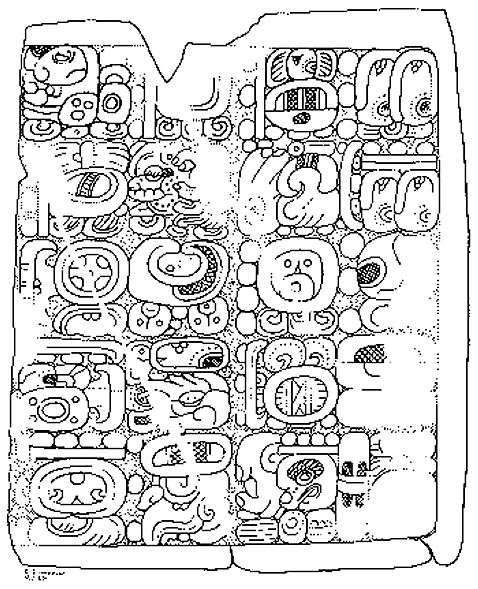
Now, I know you have some interest in the Mayan calendar ... I didn't know when I calculated this date that it was the same end date as the Mayan calendar ... to the day ...
I had a very academic interest in the I Ching, which is the Chinese method of divination, and everyone who's looked at this thing has been struck by the fact that it seems to work ... and so I carried out a mathematical analysis...
The I Ching has existed for thousands of years in China ... it's sometimes done by throwing fifty stalks, or sometimes done with coins, but it's a method of producing a thing called a hexagram which is made up of either broken or unbroken lines — six on top of each other — so if you're a mathematician you can figure, if it's made up of broken and unbroken lines and there are six of them on top of each other there must be a possibility of 64 of these things ... And thousands of years ago in China there was a vast body of literary commentary built up around these hexagrams, and they have always been presented in a traditional order, a certain way that they are always presented. And I was studying a very academic question, which was, is this order of these hexagrams a true order, in other words, governed by rules, or is it simply a random jumble sanctioned by tradition?
And this very obscure academic question led ultimately to the discovery that the I Ching was a 384-day, thirteen lunar cycle calendar. And then from there I realized that this 384-day calendar was actually a (something) subset in a fractal time-keeping scheme that is really more accurate and more sophisticated than anything in the west. So what I'm really suggesting here is that in the same way that the west conquered the nature of matter through the elaboration of modern science, about 4000 years ago in China a deeper analysis of time was carried out than has ever been undertaken in the west, and that the mathematics of this thing became buried then in this fortune-telling system. And I basically teased it out, and in my book The Invisible Landscape, and at my web site, all this stuff is explained. http://www.levity.com
The interesting thing is that with a wave like that, you can do what's called retrodicting. In other words, if you have a wave of novelty that describes the past, you have to correctly predict the Italian renaissance, the Greek enlightenment, the modernity of the 20th century, so by predicting the past, we've gained confidence that this wave predicts the future, but the theory is in a sense very conservative. It never says what will happen, it says when interesting things are highly likely, and when you're just wasting your time.
There is only one point in the entire cycle where the level of habit drops to zero; effectively then novelty becomes infinite. And at that point occurs on this solstice date in 2012. Now it's very interesting ... there are some people on the net called singularists, and they're hard-headed engineering types, and they take rates of energy release and rates of data storage, this sort of thing, and draw all their curves out, and they can see that some time between 2008 and 2020 everything will produce infinite amounts of energy ... we pack infinite amounts of data into infinitely small spaces, in other words, the same sort of things where, because of the acceleration built into the unfolding of this novelty process, we're gonna cross more territory between here and 2012 than we have crossed between the Big Bang and getting to here.
It kind of explains what is happening, that it isn't the old-style religion, that it isn't the sterile steady-state of science, it's that the universe is actually evolving some kind of process of self-metamorphosis, and human beings indicate that we have crossed some boundary into some new era, a new epoch of ever greater acceleration into this process of self-revelation. This is what religions are raving about, this is what every prophet on the street corner is trying to articulate, and I think it's real. I think we're getting a lot of static because people can only deal with it through images that they know ... you know, Marshall McLuhan said we drive into the future using only our rear view mirror, and that's sort of what it is. But I call this thing the transcendental object at the end of time, and I think in a sense, religion, Christian revelation, it will all be fulfilled in a way none of us ever suspected, because nature has this appetite for novelty and acceleration into novelty.
- Terence McKenna
Great stuff.
--------------------

|


 Threaded
 Previous
 Index
Index Next
Next


 Middleman


 Kickle
 Hubbub


 [Re:
[Re:  Edit
Edit  Reply
Reply 


 You sound like a Republican or a Fundamentalist Christian.




 1 2 3 all )
 SHiZNO
 ShroomDoom
 Rebirtha
 holeclams
 MokshaIs
 Shroomism