Auto-Summary1968: The British psychedelic rock band Status Quo released their debut album "Picturesque Matchstickable Messages from the Status Quo," featuring popular covers like "Green Tambourine" and reaching #7 in the UK and #12 in the US. The album's lead single was originally intended for "Gentleman Joe's Sidewalk Café," but the songs were later swapped. The album peaked at #12 in the UK charts.
1979: Timothy Leary's drug possession charges were dropped when it was revealed that the seized drugs were either prescribed or not covered by the law. Leary and his wife claimed they had been using ketamine, which they said produced an "out-of-body experience."
2002: A controversial Science Magazine article by George Ricaurte, claiming severe dopaminergic neurotoxicity in primates after a common recreational dose regimen of MDMA ("ecstasy"), was later retracted due to using methamphetamine instead of MDMA in the tests. The retraction raised questions about the scientific process and peer review.
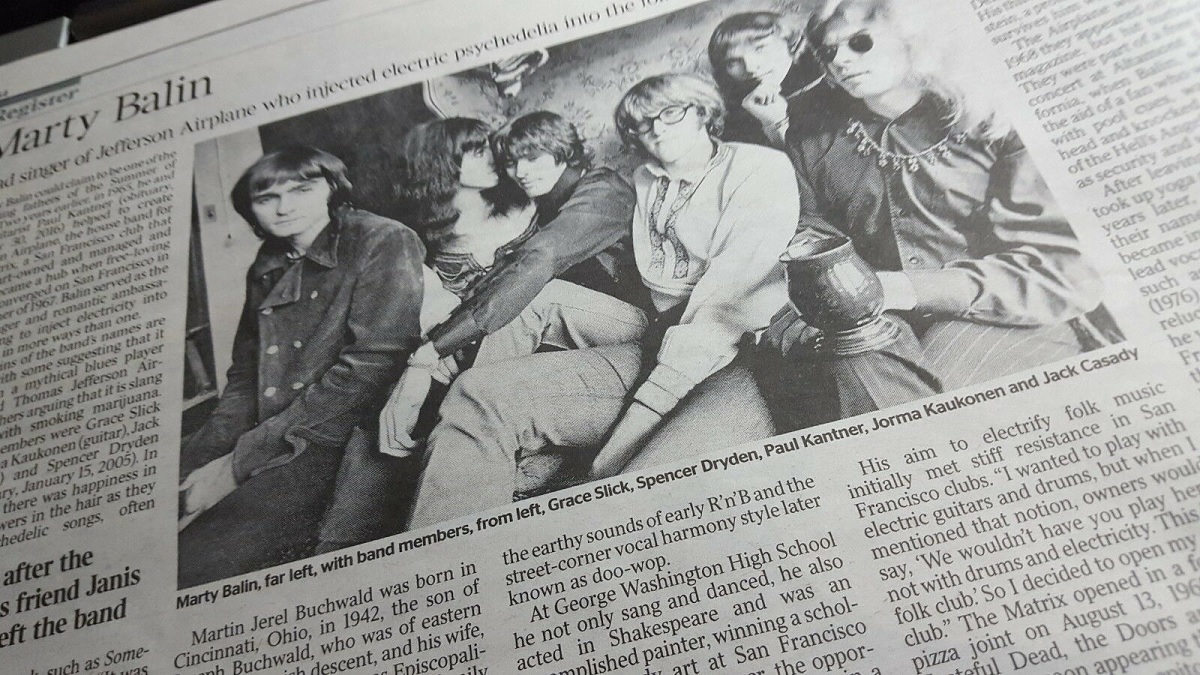
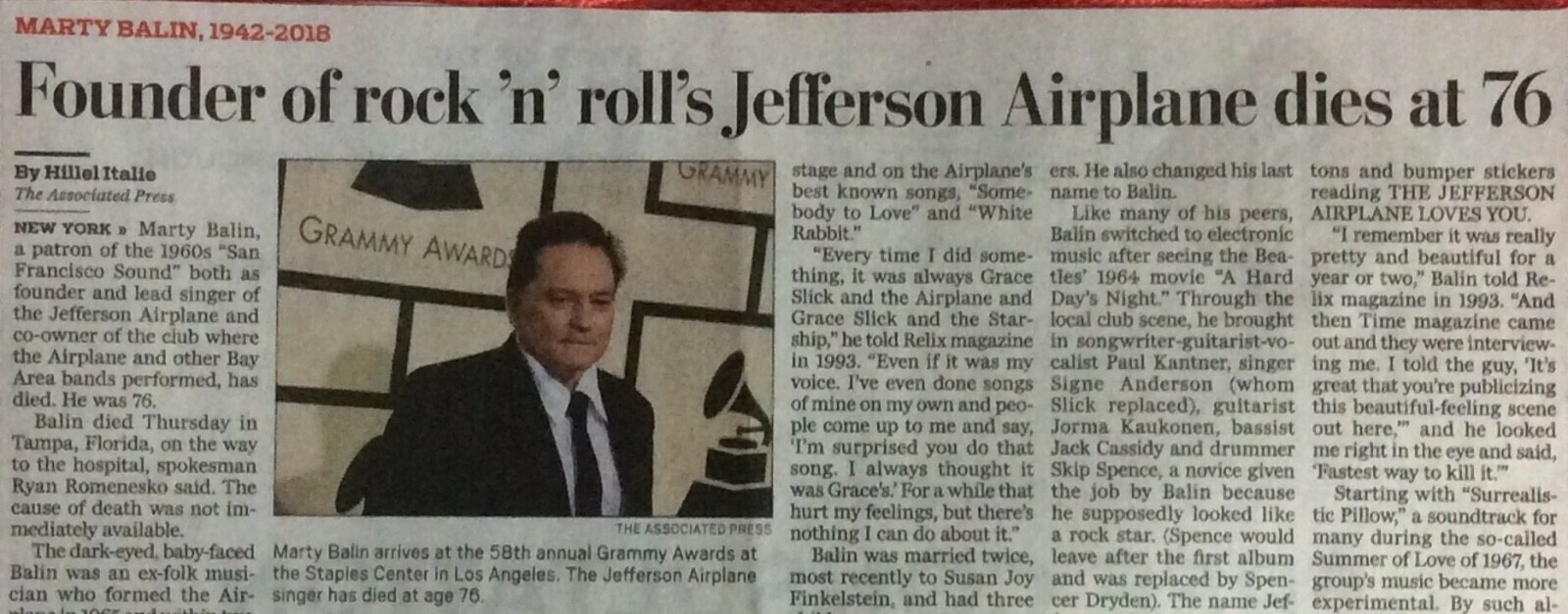
2018: Marty Balin, the American singer, songwriter, and musician best known as the founder and lead vocalist of Jefferson Airplane and Jefferson Starship, died at the age of 76.
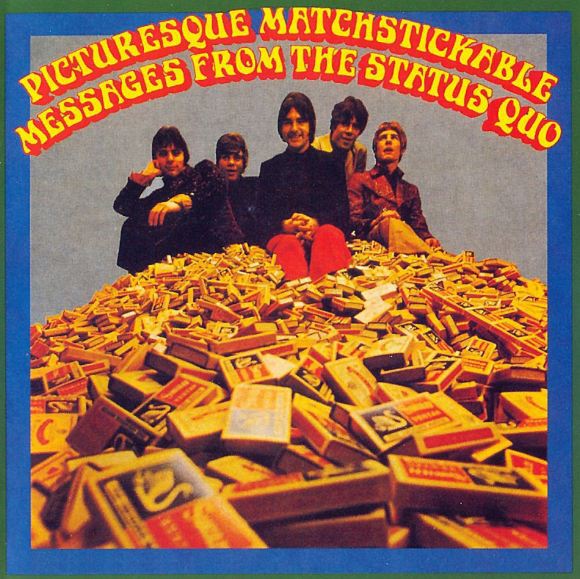
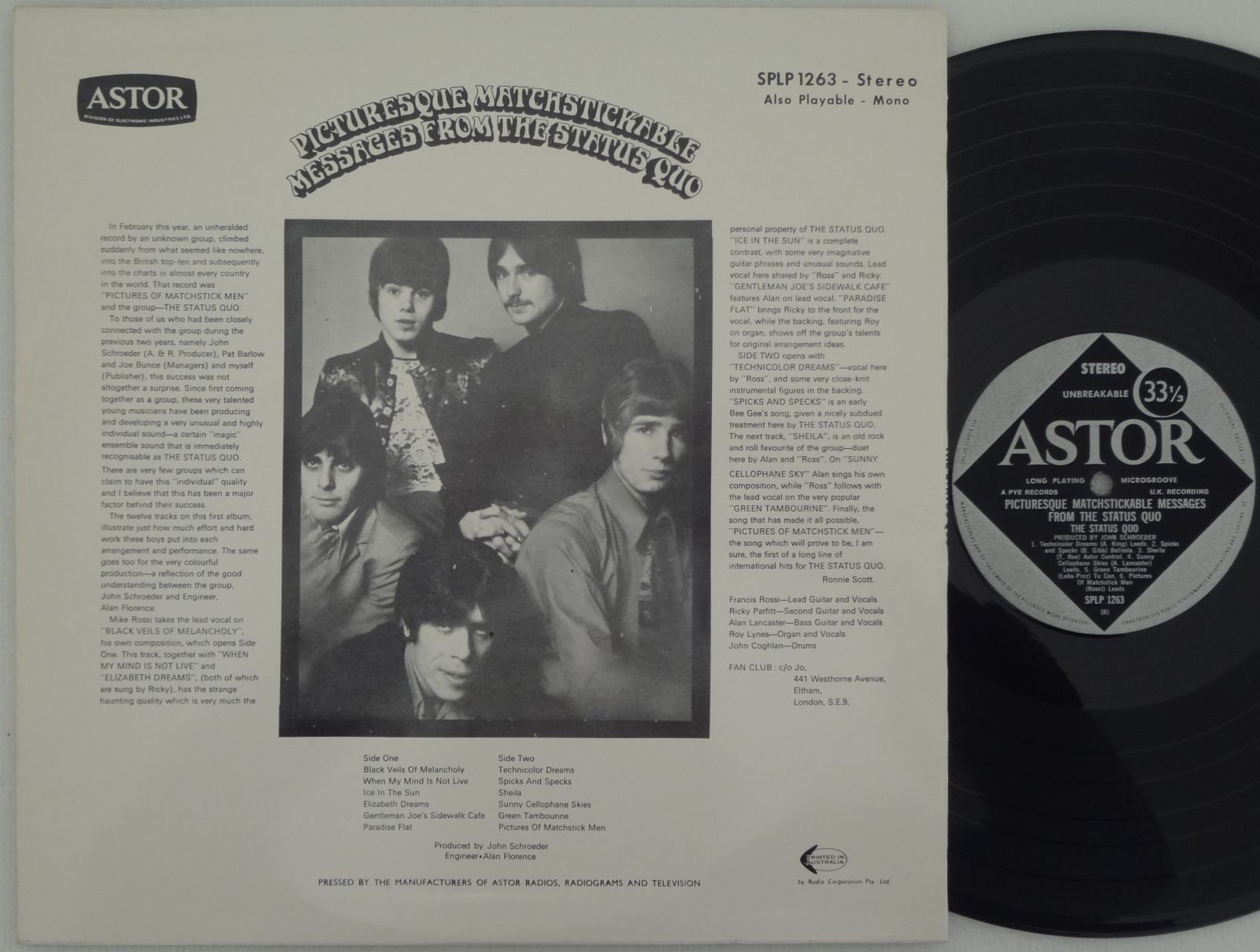
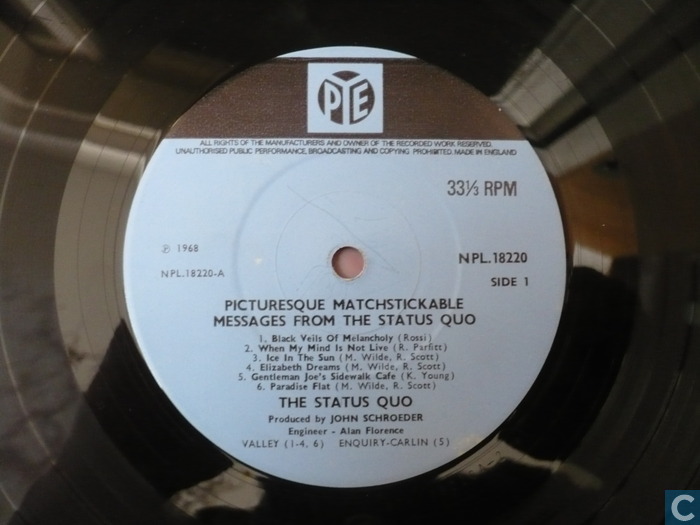
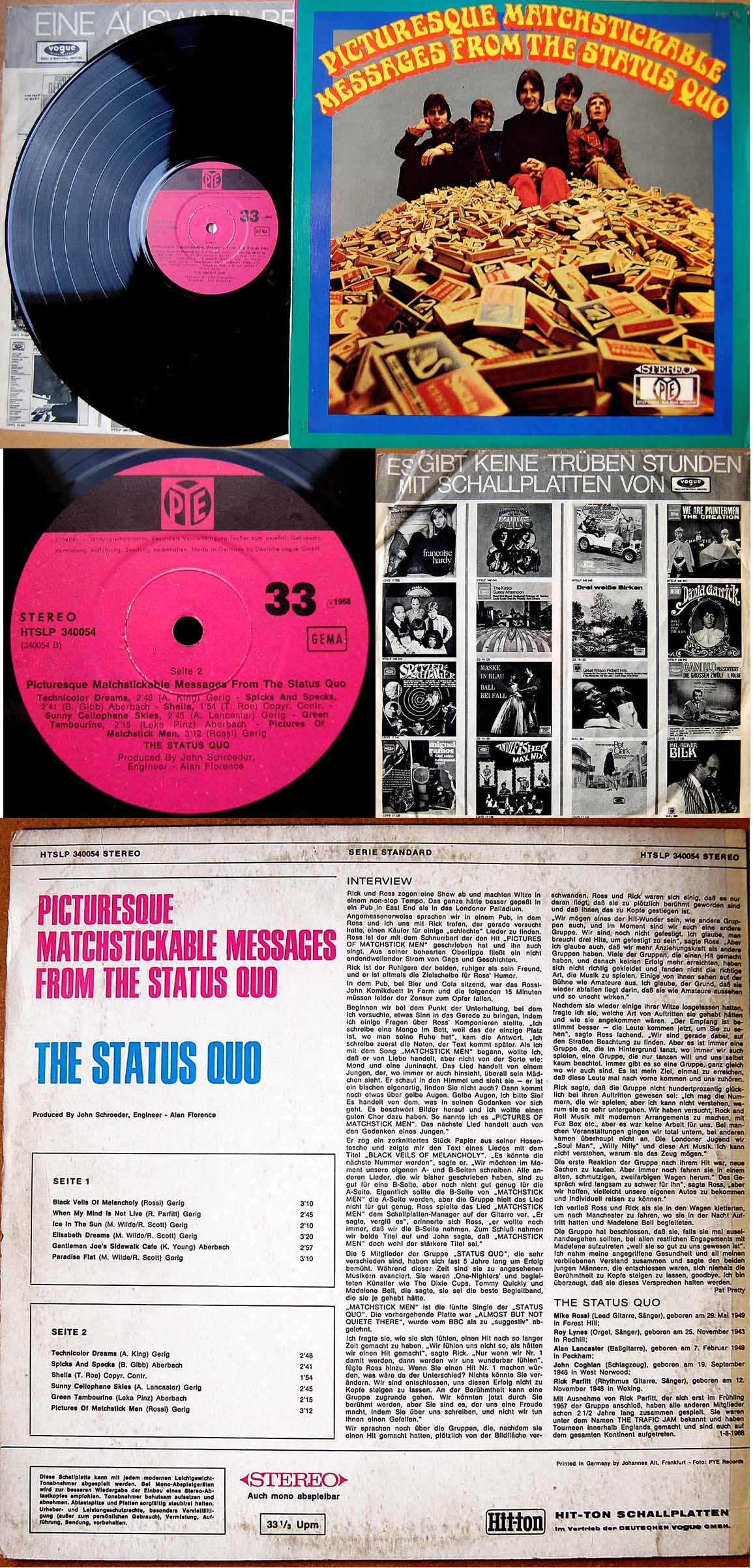
- 1968: Status Quo releases the album Picturesque Matchstickable Messages from the Status Quo
Quote:
Picturesque Matchstickable Messages from the Status Quo is the 1968 debut album by the British psychedelic rock group, Status Quo. The album features a large number of covers, including "Green Tambourine" by The Lemon Pipers.
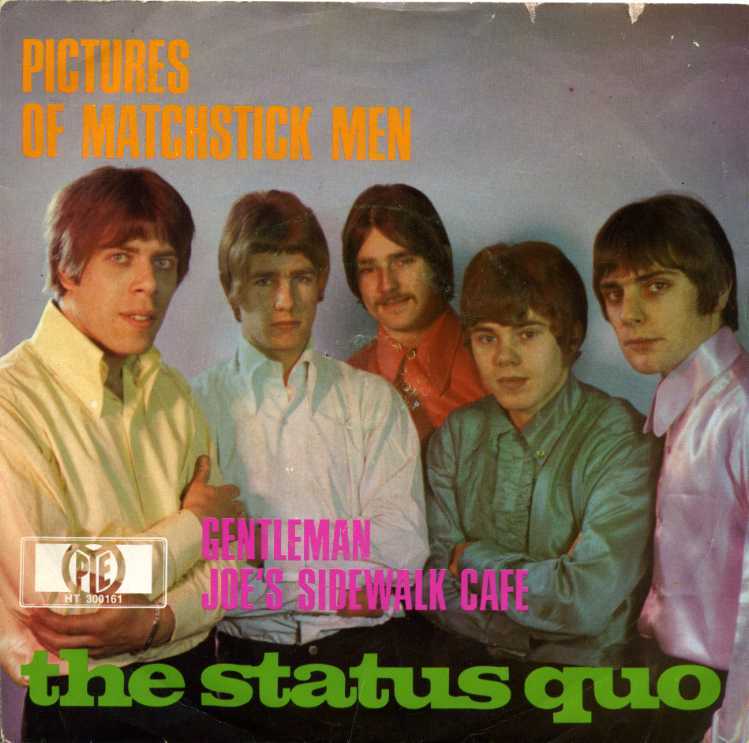
The album's lead single was originally intended to be "Gentleman Joe's Sidewalk Café", with the original Francis Rossi composition "Pictures of Matchstick Men" as the b-side, but these songs were eventually swapped round. It reached #7 in the UK, and remains the band's only major hit single in the United States where it reached #12. It also reached #8 in Canada. A second single, Rossi's "Black Veils of Melancholy" (with organist Roy Lynes' non-album track "To Be Free" as the b-side), flopped and has even been called "a carbon copy of "Pictures of Matchstick Men"". The third single, "Ice in the Sun", was written for the band by Marty Wilde and Ronnie Scott (not the jazz musician), with the Rossi/Parfitt composition "When My Mind Is Not Live" as the b-side. It reached #8 in the UK Singles Chart, and #29 in Canada.
The album itself was released on 27 September 1968, and reached #12 in the UK album charts. The band planned to release a fourth single from the album - "Technicolour Dreams" backed with the Wilde/Scott composition "Paradise Flat" - but this was withdrawn after a few days in favour of a non-album single release early the following year. The new single, Rossi and Parfitt's "Make Me Stay a Bit Longer", with bassist Alan Lancaster's "Auntie Nellie" as the b-side, was released in 31st January 1969. As well as getting the "thumbs up" from a majority of the record reviewers, this single was also something of a landmark for the group, as it would be their final release to credit them as "the" Status Quo.
Track listing
1. "Black Veils of Melancholy" (Francis Rossi) – 3:17
2. "When My Mind Is Not Live" (Rossi, Rick Parfitt) – 2:50
3. "Ice in the Sun" (Marty Wilde, Ronnie Scott) – 2:13
4. "Elizabeth Dreams" (Marty Wilde, Ronnie Scott) – 3:29
5 "Gentleman Joe's Sidewalk Café" (Kenny Young) – 3:01
6. "Paradise Flat" (Marty Wilde, Ronnie Scott) – 3:13
7. "Technicolour Dreams" (Anthony King) – 2:54
8. "Sheila" (Tommy Roe) – 1:56
9. "Spicks and Specks" (Barry Gibb) – 2:46
10. "Sunny Cellophane Skies" (Alan Lancaster) – 2:47
11. "Green Tambourine" (Paul Leka, Shelly Pinz) – 2:19
12. "Pictures of Matchstick Men" (Rossi) – 3:13
Personnel
Francis Rossi - vocals & lead guitar
Rick Parfitt - vocals & rhythm guitar
Alan Lancaster - bass guitar
John Coghlan - drums
Roy Lynes - vocals & organ
Released 27th September 1968
Recorded January - September 1968 at Pye Studios
Genre Pop rock, Psychedelic rock
Length 34:00
Label Pye Records
Producer John Schroeder
(https://en.wikipedia.org)
- 1979: Timothy Leary's charge for possession of ketamine is dropped
Quote:
DA Drops Charges Against `Test Pilots For Society'
LOS ANGELES I AP) -- Self-described "test pilots for society" Timothy Leary and his wife. Barbara. won't be making their scheduled landing in Beverly Hills Municipal Court today. The district attorney's office said Thursday that narcotics charges won't be filed against the pair because drugs found in their home last month were either prescribed or "not covered by the law." At a press conference following the Learys' Aug. 29 arrest, the 1960s drug guru predicted that outcome and said that he and his fourth wife. Barbara, had been high on a drug called ketamine. On Thursday, Deputy District Attorney Michael Marcus said Leary, 58, and his 30-year-old wife provided proof that 31/2 tablets of Preludin seized by police had been prescribed for Mrs. Leary. The district attorney's decision cancelled the couple's arraignment today on charges of possessing dangerous drugs. "They were, legally in possession of some drugs found." Marcus said. "and there was only one pill — Dexamyl — with no evidence of prescription or legality. "When such a small amount is involved, it is left to our discretion whether to file and usually we don't file on one or two pills," he said.
Dexamyl is a mixture of dextroamphetamine and amobarbitol used in the treatment of obesity and mental depression. The Learys were arrested at their Almont Drive apartment after neighbors called police to complain of screams coming from the Leary home during an apparent argument. At an Aug. 31 news conference, Leary said he and his wife had been high on ketamine. Leary, who recently launched a career as a comic "stand-up philosopher," said ketamine produced "an out-of-body ex-perience which I do not recommend to anybody but professionals in the field." Comparing his drug experimenting to the first aeronautic efforts of Orville and Wilbur Wright. Leary said he and his wife "feel we're test pilots for our society." The Learys also told reporters that they had been making love, not fighting, when police arrived on the scene. "Everything was fine and dandy until everyone burst into the bedroom," Mrs. Leary said. Leary, a Springfield. Mass. native. is still on parole after serving 312 years in state prison for marijuana possession and a subsequent jail break. He was released from prison in 1976.
(Santa Cruz Sentinel (Santa Cruz, California), 28 Sep 1979, Fri, Page 8)
Leary Has Explanation for All Those Moans and Groans
BY TIM WATERS
Times Staff Writer
LOS ANGELES — Timothy Leary had nothing but kind words Thursday for the Beverly Hills police officers who arrested him and his wife on drug charges. But, said Leary, the police simply were mistaken about the drugs he and his wife were accused of keeping and about the moans neighbors thought they heard coming from the Learys' apartment. "My wife and I were making loud love," Leary explained in a telephone interview. "There were a lot of moans and groans and ohhh and ahhhs and oh my gods. We regularly take extremely strong aphrodisiacs." The Learys were arrested early Wednesday morning [August 29, 1979]after police officers, responding to a neighbor's telephone call about a woman screaming, found a "white substance resembling cocaine" in the couple's apartment. Both were booked on suspicion of possession of cocaine and later released after posting bail. They are scheduled to be arraigned Sept. 21 in Beverly Hills Municipal Court. Mrs. Leary, however, was not as kind as her husband towards the police.
"What they found was a tiny little bottle with residue in it which they thought was cocaine," she said. "So they dragged us off for possession. Which is kind of ridiculous because you would think any policeman in Beverly Hills would know cocaine if he saw it. "The drug we took was given to me by a friend," Mrs. Leary said. "It was called ketamine. It is not on any dangerous drug list or any penal code list. I had been wanting to take it for a long time but it was a drug that had to be injected and I wouldn't do it. Someone had it crystallized into a powder that you could sniff so they gave it to me and I asked Timothy to take it with me." Ketamine is an anesthetic that can cause a rapid loss of consciousness. Drug experts say it induces a cataleptic state in which the user appears to be awake but is unconscious and does not respond to pain. The couple said they took the drug around 11 p.m. Police arrived at 11:30 p.m., and soon afterwards Mrs. Leary started to vomit, Paramedics were called and she was taken to Cedars-Sinai Medical Center.
( The Los Angeles Times (Los Angeles, California), 31 Aug 1979, Fri, Other Editions, Page 32)
- 2002: Science Magazine publishes the George Ricaurte "holes in the brain from MDMA" article
Quote:
Report
Severe Dopaminergic Neurotoxicity in Primates After a Common Recreational Dose Regimen of MDMA ("Ecstasy")
George A. Ricaurte1,*, Jie Yuan1, George Hatzidimitriou1, Branden J. Cord2, Una D. McCann3
See all authors and affiliations
Science 27 Sep 2002:
Vol. 297, Issue 5590, pp. 2260-2263
DOI: 10.1126/science.1074501
Vol 297, Issue 5590
27 September 2002
(http://science.sciencemag.org)
"Severe dopaminergic neurotoxicity in primates after a common recreational dose regimen of MDMA ("ecstasy")", was a paper by Dr. George Ricaurte which was published in the leading journal Science, and later retracted. The reason was that instead of using MDMA, methamphetamine had been used in the test.
The retraction of the paper led to questions over its publication. It has also been asserted that this questions the peer review process. Many have also argued that the failings in the paper (use of materials other than those specified) could not have been caught by peer review; and that the scientific process did work successfully in the end, in that the article was ultimately retracted.
The paper was published in the 27 September 2002 issue of Science (volume 297, pages 2260-3).[1] The article had been submitted to Science on 29 May 2002 and was accepted for publication on 14 August 2002. Neither the time required for peer review nor the time between acceptance for publication and actual date of publication were unusual.
Original publication
The Ricaurte article was published in the middle of a group of 16 "reports" and not given special prominence in the "Highlights of research in this issue" section of the 27 September 2002 issue of Science. The short editorial commentary on the article was called "More Dangers from Designer Drugs" and drew the reader's attention to previously published research indicating that "ecstasy" use alters serotoninergic synaptic transmission. Science also commented that by linking "ecstasy" to dopaminergic neurotoxicity in monkeys, the Ricaurte article suggested that recreational users of "ecstasy" might be putting themselves at risk for developing neuropsychiatric disorders (such as Parkinson's disease) that are related to dopamine dysfunction.
The Science section called "News of the Week" in the 27 September 2002 issue had an article by reporter Constance Holden called, "Drug Find Could Give Ravers the Jitters" (on pages 2185-2187). This news coverage did give some special prominence to the Ricaurte article. The Holden commentary stressed that the Ricaurte article was part of an active scientific controversy about the ability of "ecstasy" to cause permanent brain damage in human recreational drug users. This news article included a section with speculation from Ricaurte trying to justify why other researchers fail to observe ecstasy-induced dopaminergic neurotoxicity. Jon Cole of the University of Liverpool explained that the results on dopaminergic neurotoxicity in the Ricaurte article were a big surprise and was quoted as saying, "The entire human literature relies on the notion that MDMA is a selective serotonergic neurotoxin."
Press response to original publication
Alan Leshner, former director of the National Institute on Drug Abuse (NIDA) and chief executive of the American Association for the Advancement of Science, which publishes Science, agreed. This says even a single evening's use is playing Russian roulette with your own brain, he said.
— Washington Post, September 30, 2002
Ricaurte's findings were widely quoted when Congress was lining up support for the Illicit Drug Anti-Proliferation Act, also known as the Rave Act, which makes it easier to prosecute club owners and event promoters for the drug use of their customers. Congress passed the Rave Act on April 10, 2003. And tax dollars pay for public service announcements declaring that one hit of Ecstasy can destroy your brain.
— E-fer Madness, Salon.com, 2003
RAVE Act
The retracted paper left the public with the impression that ecstasy is far more hazardous than it may actually turn out to be. This perception may have influenced the fate of the Reducing Americans' Vulnerability to Ecstasy Act. The act, which was appended to another bill and signed into law in April, holds club owners responsible for drug use on their premises. Critics say it is unlikely to reduce ecstasy use, but may discourage club owners from voluntary measures to protect users, such as cool-off rooms for the dangerous overheating that can occur with ecstasy, as these are tantamount to admission that drug use is going on. The legislation might have passed anyway, even if Ricaurte' s study had never been published, but the news certainly lent it urgency.
— Nature 2003
Weeks after the botched study was published, its conclusions were repeatedly invoked by witnesses at a House subcommittee hearing on the Reducing Americans' Vulnerability to Ecstasy Act (RAVE Act)
— Village Voice 2004
Published concerns about the study
The 6 June 2003 of Science contained a letter ("MDMA ("Ecstasy") and Neurotoxicity", volume 300, pages 1504-1505)[10] that questioned the results of the September 2002 Ricaurte article. Ricaurte was allowed to provide a reply. Ricaurte stood by the results of the September 2002 article and further suggested that even careful clinical MDMA research ran the risk of causing brain injury.
Formal retraction
The retraction of the September 2002 Ricaurte article was published in the 12 September 2003 of Science (volume 301, page 1479). Ricaurte said that methamphetamine had been the cause of the previously reported dopaminergic neurotoxicity, not "ecstasy". The retraction letter seemed to suggest that the supplier of the drugs had switched the labels on two bottles (one containing "ecstasy" and one containing methamphetamine) that were shipped to the Ricaurte lab on the same day.
Aftermath of the retraction
In the 12 September 2003 issue of Science there was also another article by Constance Holden titled "Paper on Toxic Party Drug Is Pulled Over Vial Mix-Up". Holden reported that the drug supplier, Research Triangle Institute, was conducting a thorough review of its procedures to see if it could have switched the labels on the drug bottles. Ricaurte was reported to still be interested in previous results that suggested MDMA is toxic to dopamine neurons in mice.
In a review of the year's events published in the 19 December 2003 issue of Science (volume 302, page 2033), Editor-in-Chief Donald Kennedy wrote, "It was also a vintage year for scientific fluffs. We shared in one: Some vials containing the recreational drug Ecstasy got switched with vials containing methamphetamine, and we wound up publishing a paper we wish we hadn't".
An editorial in the journal Nature called the retraction "one of the more bizarre episodes in the history of drug research" and noted that "Some observers have in the past questioned NIDA's ability to maintain its independence in the face of the immense pressures brought to bear by those who stand behind America's interminable 'war on drugs'."
Another remarkable aspect of this episode is the public endorsement of the study, at the time of its publication, by Alan Leshner, chief executive of the AAAS and former director of NIDA. It isn't clear why an officer of the AAAS should be involved at all in publicly promoting a particular result published in its journal, least of all one whose outcome was questioned at the outset by several experts. The AAAS issued the retraction late in the afternoon on Friday 5 September, resulting in low-key media coverage, which contrasts sharply with the hype surrounding the initial paper.
— Nature 2003
In an interview in The Scientist British scientists Colin Blakemore and Leslie Iversen described how they expressed concerns about the article with editors at Science. "It's an outrageous scandal," Iversen told The Scientist. "It's another example of a certain breed of scientist who appear to do research on illegal drugs mainly to show what the governments want them to show. They extract large amounts of grant money from the government to do this sort of biased work."
Upon results of the review, Research Triangle Institute asserted it was impossible the vials had been mislabeled as all other vials in suspect lots were properly labeled by labeling machines and it was not possible some vials had been mislabeled while others had not as the machines use printed rolls of labels. Many have asserted Ricaurte switched the labels in order to insure the continuation of funding and his results were fraudulent rather than mistaken. NIDA and AAAS are also suspected of aiding in the fraud.
(https://en.wikipedia.org)
Quote:
Marty Balin (/ˈbælɪn/; born Martyn Jerel Buchwald; January 30, 1942 – September 27, 2018) was an American singer, songwriter, and musician best known as the founder and one of the lead singers and songwriters of Jefferson Airplane and Jefferson Starship.
Jefferson Airplane
Balin was the primary founder of Jefferson Airplane, which he "launched" from a restaurant-turned-club he created and named the Matrix, and was also one of its lead vocalists and songwriters from 1965 to 1971. In the group's famous 1966–1971 iteration, Balin served as co-lead vocalist alongside Grace Slick and rhythm guitarist Paul Kantner.
While his output diminished after Surrealistic Pillow (1967) as Slick, Kantner, and lead guitarist Jorma Kaukonen matured as songwriters (a process compounded by Balin's eschewal of the group's burgeoning "ego trips"), his most enduring songwriting contributions—which were often imbued with a romantic, pop-oriented lilt that was atypical of the band's characteristic forays into psychedelic rock—include "Comin' Back to Me" (a folk rock ballad later covered by Ritchie Havens and Rickie Lee Jones), "Today" (a collaboration with Kantner initially written on spec for Tony Bennett that was prominently covered by Tom Scott), and again with Kantner, the topical 1969 top-100 hit "Volunteers." Although uncharacteristic of his oeuvre, the uptempo "3/5 of a Mile in 10 Seconds" and "Plastic Fantastic Lover" (both written for Surrealistic Pillow) remained integral components of the Airplane's live set throughout the late 1960s.
Balin played with the Jefferson Airplane at the Monterey Pop Festival in 1967 and at the Woodstock Festival in 1969.
In December 1969, Balin was knocked unconscious by members of the Hells Angels motorcycle club while performing during the infamous Altamont Free Concert, as seen in the 1970 documentary film Gimme Shelter. In April 1971, he formally departed Jefferson Airplane after breaking off all communication with his bandmates following the completion of their autumn 1970 American tour. He elaborated upon this decision in a 1993 interview with Jeff Tamarkin of Relix:
I don't know, just Janis's death. That struck me. It was dark times. Everybody was doing so much drugs and I couldn’t even talk to the band. I was into yoga at the time. I’d given up drinking and I was into totally different area, health foods and getting back to the streets, working with the American Indians. It was getting strange for me. Cocaine was a big deal in those days and I wasn’t a cokie and I couldn’t talk with everybody who had an answer for every goddamn thing, rationalizing everything that happened. I thought it made the music really tight and constrictive and ruined it. So after Janis died, I thought, I’m not gonna go onstage and play that kind of music; I don’t like cocaine.
Balin remained active in the San Francisco Bay Area rock scene, managing and producing an album for the Berkeley-based sextet Grootna before briefly joining funk-inflected hard rock ensemble Bodacious DF as lead vocalist on their eponymous 1973 debut album. The following year, Kantner asked Balin to write a song for his new Airplane offshoot group, Jefferson Starship. Together, they wrote the early power ballad "Caroline", which appeared on the album Dragon Fly with Balin as guest lead vocalist.
Personal life
Balin enjoyed painting all his life. He painted many of the most influential musicians of the last half of the 20th century. Marty Balin's Atelier is located at 130 King Fine Art in Saint Augustine, Florida, Balin's permanent signature collection gallery.
Balin resided in Florida and San Francisco with his wife, Susan Joy Balin, formerly Susan Joy Finkelstein. Together, they had Balin's daughters Jennifer Edwards and Delaney Balin, and Susan's daughters Rebekah Geier and Moriah Geier.
Jennifer was born later in the year of his 1963 marriage to Victoria Martin. Balin married Karen Deal, Delaney's mother, in 1989. Karen died in 2010.
While on tour in March 2016, Balin was taken to Mount Sinai Beth Israel Hospital in New York City after complaining of chest pains. After undergoing open-heart surgery, he was transferred to an intensive-care unit to spend time recovering. In a subsequent lawsuit, Balin alleged that neglect and inadequate care facilities on the hospital's behalf had resulted in a paralyzed vocal cord, loss of his left thumb and half of his tongue, bedsores, and kidney damage.
Death
Balin died on September 27, 2018 at the age of 76.
(https://en.wikipedia.org)

--------------------
--------------------------------
Mp3 of the month: Wild Things- Another Colored Ink Drawing (A.C.I.D.)

Edited by Learyfan (09/27/25 12:16 PM)
|

 Threaded
 Previous
 Index
 Next
 Shop: Unfolding Nature: Being in the Implicate Order
 Learyfan


 Edit
 Reply









 Rose

 1 2 all )
 Zoso_UK
 ding

 sancho
 HB