Auto-SummaryThis forum post delves into the debate over cultural appropriation in the context of mycology and indigenous practices. The author argues that assuming all mushrooms have been historically sacred to Western cultures is a large supposition. They point to examples of various Indigenous cultures, such as American Indians and Aboriginals, using mushrooms like Gymnopilus luteofolius and Psilocybe species in ceremonial contexts. The author emphasizes that absence of proof isn't proof of absence and questions whether discarding all active mushrooms out of respect for Indigenous culture is the right approach. They suggest that volunteering with organizations like Greenpeace or helping build homes for Native communities could have a more significant impact. The author also discusses their personal journey of respecting Indigenous traditions while pursuing mycological knowledge, advocating for a nuanced approach rather than an all-or-nothing stance. They conclude by expressing their hope for finding common ground and emphasizing their intention to use knowledge for the benefit of Indigenous communities.
That is where I disagree, I think that is a pretty big supposition to take. I hope you re think that as I don't represent the whole west, nor the current and past colonial weavings of it. Just because there's been one culture that has intact mushroom practices that has decided to share this with the rest of the world, with mycology & anthropology, does not mean all mushrooms have not had history as sacred medicine. Absence of proof is not proof of absence, and in the case of American Indians and Aboriginals, there have been uses of mushrooms like Gymnopilus luteofolius and Psilocybe ovoideocystidiata or subaeruginosa or even caerulescens and of course the various Psilocybe's that the tribes of meso and south America use.
You said Psilocybe ingeli, but im sure you meant maluti. Heck, even if you meant both, it is absolutely not even remotely a logical response to appropriation to just stop having anything to do with these two mushrooms for the reason you stated. If you really think that, is not the next step to throw away all active mushrooms in order to not operate in the mode of hypocrisy and to respect the cultures who view them as sacred medicine throughout history?
As I believe with a certainty, every active mushroom was sacred to someone at some point in time. In African Plant Medicine, I learned about Panaeolus, and how various African tribes use them in ceremony specifically to fight the shadow self, and they administer it before the person goes to sleep. It is used in a very specific way in a very specific, sacred context.
I am not trying to take an extreme stance, I am simply saying it would be prudent therefore for you to not fuss with your pans anymore, and let all them go, because you believe it is sacred medicine and the west has appropriated enough shit.
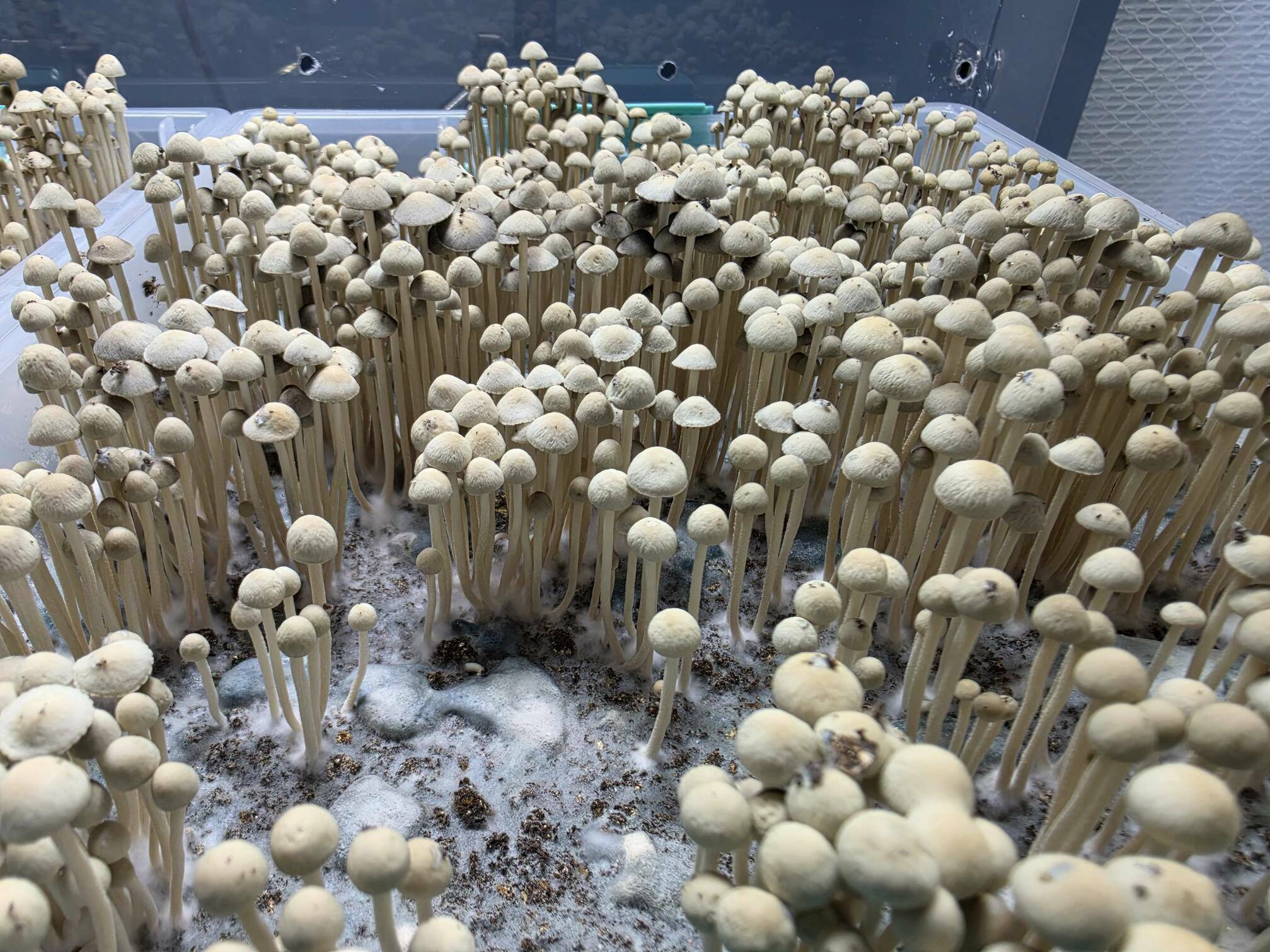
I agree with you on the last five words, but here's why I hope to illustrate to you where I am coming from. Respecting Natives is a very good trait to have, although I think boundaries that aren't understood by our Western upbringing can be trampled because we don't know when to stop; and find ourselves over-compensating for the lack of inclusion that has been shown to marginalized groups. While these marginalized groups that survived white oppression have endured far worse than segregation, it is important to note the figures responsible for breaking racial barriers and bringing traditional knowledge to the general public for those interested few to gobble up. Malcom Douglas is a particular name that comes to mind. I believe I found Panaeolus cinctulus f. subsecotioides because I truly was hoping to obtain Psilocybe maluti(and still do), but it is just not available to me at this time, however the mushroom spirit bestowed to me Vipers and Polaris because of their similar morphology to Psilocybe maluti. I truly believe that. In regards to these Gymnopilus I study as well, I've been honored to be around a small circle of Navajo who have given me the name they use to denote Gymnopilus luteofolius.
I can tell you they used that and still apparently do in ceremony here in the Southwest USA. Regardless of finding the mushrooms themselves, if I got rid of all the Gymnopilus luteofolius I found in homage to Native American culture, specifically Navajo in this instance, does it serve any real purpose at all? Even if it was televised, and I burned my library on National TV so everyone can see how serious I am about respecting native culture and not encroaching upon or appropriating it. Does that benefit native Americans more than say, traveling to Pine Ridge Indian Reservation and helping build a home?
Similarly, I can stop fussing about maluti in the name of opposing cultural appropriation in the face of my western background and upbringing, or I can volunteer with Greenpeace and distribute food and books for three months in impoverished Africa in the name of respecting indigenous culture(s). The latter makes more of an impact than the former in both instances and sure, if people don't have this mush passion and zeal to speak up for their admiration and Respect for indigenous people when they've been grouped with someone who doesn't care about them, then they don't deserve maluti.
However, if someone does not deserve a mushroom based off their level of respect for indigenous culture not being high enough, then we all need to examine our motivations for Mycology and what we plan to actually do with this sacred medicine once obtained. Me, I've personally always been about the recognition of Ancient indigenous entheogenic use of mushrooms, not for my own benefit or that of my immediate community, but to the benefit of the indigenous community with whose relative mushroom is associated with.
I've had dealings with less than 1% of the Southwest tribes, yet I still know of ceremony regarding the mushroom because my intention is to find commonalities between modern mycology and the Native American's understanding of it.
I am not building to a point like "out of anybody I deserve maluti", because of my respect for indigenous peoples; I want to say how much of a slippery slope it is to completely dismiss trying to work with a species because a current indigenous culture views it as sacred medicine. The label of "just for them" is something we created as well, it could serve to make us feel better about harming and exploiting so many people, but is actually creating a further divide by distinguishing certain races, and the privileges and rights specific to them in the letter of the law.
Although I am white skinned, with blonde hair & blue eyes, this does not bar me from practicing the Four Directions prayer. I'll pray with barley flour or tobacco, preferably that I grew, if not dokha from the store, but I'll do this prayer to feel closer to the Creator- or just when the situation arises. Because of all this, how I was raised, praying in the native american Lakota tradition, as well as going to church on Sundays, I could never take too seriously the concept of total abstinence surrounding a certain thing because it belongs to the Natives. It is something I don't believe they asked for, and practicing such would likely be viewed as foolish by the same people one is trying to represent the sovereignty of. Even between households in your own neighborhood there are cultural differences. I'm on board with respecting the tribes of indigenous earth, though let's find ways we can agree upon because even if I had 30 people telling me to burn my mushrooms and walk away, I would still be confident that my way brings the most immersion of the uninitiated into Native culture and because of this, the knowledge and respect will be passed on through the practice of foraging or cultivation.
Lastly, I understand the "folks" in your comment wasn't explicitly directed at me, but since I talk about maluti more than anyone I know and have a deep-seeded respect for indigenous people, I had to cover my bases. At the very least now you know I'm not some colonizer ready to stake my flag pole in the bum of the nearest and most easily accessed indigenous person. I hope you found my comment moving, in a good way.
Punjabensis sounds interesting. I wonder if they can be found in Nevada if they were found in AZ. I am taking a trip to Mount Charleston soon, a grossly understudied piece of land as far as mushroom observations go. I am hoping to find Amanita muscaria, and perhaps a few Psilocybe and Gymnopilus. I'll keep my eyes open for the pans along the trail tho. I'd be excited to find oysters and lions mane, as far as the gourmets go. We'll see. I feel like this is a good time to go foraging. It is sprinkling in the city.
Ah, Scott's Panaeolus collections must be massive. Chlorocystis grows in Flordia, got it. Do you ever grow pans outside in your garden? I feel like that'd be a pretty cool way to spread em. Though its kinda cold rn in your neck of the woods. Mine too. Regardless I am thinking of planting some more Pans around, guerilla style.
--------------------
In this life, trust is a luxury we cannot afford.
|


 Threaded
 Previous
 Index
 Next


 Kloakk


 tree frog


 [Re:
 Edit
 Reply




 1 2 3 4 ... 91 92 )
 Hindsight

 Bra

 Huskies

 Acid-Fast
 rob_531
 sancho
