
| Home | Community | Message Board |
|
You are not signed in. Sign In New Account | Forum Index Search Posts Trusted Vendors Highlights Galleries FAQ User List Chat Store Random Growery » |

This site includes paid links. Please support our sponsors.
|
 Threaded
 Previous
 Index
Index Next
NextShop:  Spores for European Microscopy Spores for European Microscopy  Golden Teacher Liquid Culture For Sale Golden Teacher Liquid Culture For Sale  North Spore Mushroom Grow Kits & Cultivation Supplies North Spore Mushroom Grow Kits & Cultivation Supplies  Unfolding Nature: Being in the Implicate Order Unfolding Nature: Being in the Implicate Order  Bulk Cannabis Seeds Bulk Cannabis Seeds |
| |||||||
 Learyfan Learyfan It's the psychedelic movement!     Registered: 04/20/01 Posts: 35,701 Loc: High pride! Last seen: 5 hours, 56 minutes |
| ||||||

-------------------- -------------------------------- Mp3 of the month: Wild Things- Another Colored Ink Drawing (A.C.I.D.) 
Edited by Learyfan (09/29/24 09:19 AM)
| |||||||
|
Learyfan It's the psychedelic movement! Registered: 04/20/01 Posts: 35,701 Loc: High pride! Last seen: 5 hours, 56 minutes |
| ||||||
|
COME TOGETHER
(Lennon/McCartney) JOHN 1969: "'Come Together' changed at the session. We said, 'Let's slow it down. Let's do this to it, let's do that to it,' and it ends up however it comes out. I just said, 'Look, I've got no arrangement for you, but you know how I want it.' I think that's partly because we've played together a long time. So I said, 'Give me something funky and set up a beat, maybe.' And they all just joined in." PAUL 1969: "On the new album I like 'Come Together,' which is a great one of John's." GEORGE 1969: "Come Together" was one of the last ones to be recorded. John was in an (automobile) accident, so he was off for a period of time. Then when we got back, which was only a week or so before we finished the album, we did this one. I think he wrote it only a month or so ago, so it's very new. It's sort of twelve-bar type of tune, and it's one of the nicest sounds we've got, actually. Nice drumming from Ringo. And it's sort of up-tempo. I suppose you'd call it a rocker. Rocker-beat-a-boogie." JOHN 1980: "'Come Together' is me-- writing obscurely around an old Chuck Berry thing. I left the line 'Here comes old flat-top.' It is nothing like the Chuck Berry song, but they took me to court because I admitted the influence once years ago. I could have changed it to 'Here comes old iron face,' but the song remains independent of Chuck Berry or anybody else on earth. The thing was created in the studio. It's gobbledygook-- 'Come Together' was an expression that Tim Leary had come up with for his attempt at being president or whatever he wanted to be, and he asked me to write a campaign song. I tried and I tried, but I couldn't come up with one. But I came up with this, 'Come Together,' which would've been no good to him-- you couldn't have a campaign song like that, right? Leary attacked me years later, saying I ripped him off. I didn't rip him off. It's just that it turned into 'Come Together.' What am I going to do, give it to him? It was a funky record-- it's one of my favorite Beatle tracks, or, one of my favorite Lennon tracks, let's say that. It's funky, it's bluesy, and I'm singing it pretty well. I like the sound of the record. You can dance to it. I'll buy it!" (laughs) SOMETHING (Harrison) JOHN 1969: "I think that's about the best track on the album, actually." PAUL 1969: "I like George's song 'Something.' For me I think it's the best he's written." GEORGE 1969: "I wrote the song 'Something' for the album before this one, but I never finished it off until just recently. I usually get the first few lines of words and music together, both at once... and then finish the rest of the melody. Then I have to write the words. It's like another song I wrote when we were in India. I wrote the whole first verse and just said everything I wanted to say, and so now I need to write a couple more verses. I find that much more difficult. But John gave me a handy tip. He said, 'Once you start to write a song, try to finish it straight away while you're still in the same mood.' Sometimes you go back to it and you're in a whole different state of mind. So now, I do try to finish them straight away." GEORGE 1969: "I could never think of words for it. And also because there was a James Taylor song called 'Something In The Way She Moves' which is the first line of that. And so then I thought of trying to change the words, but they were the words that came when I first wrote it, so in the end I just left it as that, and just called it Something. When I wrote it, I imagined somebody like Ray Charles doing it. That's the feel I imagined, but because I'm not Ray Charles, you know, I'm sort of much more limited in what I can do, then it came out like this. It's nice. It's probably the nicest melody tune that I've written." GEORGE 1980: "'Something' was written on the piano while we were making the White Album. I had a break while Paul was doing some overdubbing so I went into an empty studio and began to write. That's really all there is to it, except the middle took some time to sort out. It didn't go on the White Album because we'd already finished all the tracks." MAXWELL'S SILVER HAMMER (Lennon/McCartney) JOHN 1969: "He (Paul) did quite alot of work on it. I was ill after the (automobile) accident while they did most of the track, and I believe he really ground George and RIngo into the ground recording it. We spent more money on that song than any of them on the whole album, I think." GEORGE 1969: "Maxwell's Silver Hammer is just something of Paul's which we've been trying to record. We spent a hell of a lot of time on it. And it's one of those instant sort of whistle-along tunes, which some people will hate, and some people will really love it. It's more like Honey Pie, you know, a fun sort of song. But it's pretty sick as well though, 'cuz the guy keeps killing everybody. But that's one of the tunes we use synthesizer on, which is pretty effective on this." PAUL circa-1994: "'Maxwell's Silver Hammer' is my analogy for when something goes wrong out of the blue, as it so often does, as I was beginning to find out at that time in my life. I wanted something symbolic of that, so to me it was some fictitious character called Maxwell with a silver hammer. I don't know why it was silver, it just sounded better than Maxwell's hammer. It was needed for scanning. We still use that expression now when something unexpected happens." OH! DARLING (Lennon/McCartney) JOHN 1980: "'Oh! Darling' was a great one of Paul's that he didn't sing too well. I always thought that I could've done it better-- it was more my style than his. He wrote it, so what the hell, he's going to sing it. If he'd had any sense he should have let me sing it." (laughs) PAUL circa-1994: "I mainly remember wanting to get the vocal right, wanting to get it good, and I ended up trying each morning as I came into the recording session. I tried it with a hand mike, and I tried it with a standing mike, I tried it every which way, and finally got the vocal I was reasonably happy with. It's a bit of a belter and if it comes off lukewarm then you've missed the whole point. It was unusual for me-- I would normally try all the goes at a vocal in one day." OCTOPUS'S GARDEN (Starkey) GEORGE 1969: "'Octopus's Garden' is Ringo's song. It's only the second song Ringo wrote, and it's lovely. Ringo gets bored playing the drums, and at home he plays a bit of piano, but he only knows about three chords. He knows about the same on guitar. I think it's a really great song, because on the surface, it just like a daft kids' song, but the lyrics are great. For me, you know, I find very deep meaning in the lyrics, which Ringo probably doesn't see, but all the thing like 'resting our head on the sea bed' and 'We'll be warm beneath the storm' which is really great, you know. Because it's like this level is a storm, and if you get sort of deep in your consciousness, it's very peaceful. So Ringo's writing his cosmic songs without noticing." RINGO 1981: "He (a ship captain) told me all about octopuses-- how they go 'round the sea bed and pick up stones and shiny objects and build gardens. I thought, 'How fabulous!' because at the time I just wanted to be under the sea, too. I wanted to get out of it for a while." I WANT YOU (SHE'S SO HEAVY) (Lennon/McCartney) GEORGE 1969: "It's very heavy. John plays lead guitar and sings the same as he plays. It's really basically a bit like a blues. The riff that he sings and plays is really a very basic blues-type thing. But again, it's very original sort of John-type song. And the middle bit's great. John has an amazing thing with his timing. He always comes across with sort of different timing things, for example All You Need Is Love, which just sort of skips beats out and changes from three-four to four-four, all in and out of each other. But when you question him as to what it is, he doesn't know. He just does it naturally. And this has got... the bridge section of this is a bit like that. And it's got a really very good chord sequence that he uses." JOHN 1969: "We used a Moog synthesizer on the end. That machine can do all sounds and all ranges of sound." JOHN 1971: "Simplicity is evident in 'She So Heavy.' In fact a reviewer wrote: 'He seems to have lost his talent for lyrics, it's so simple and boring.' When it gets down to it-- when you're drowning, you don't say 'I would be incredibly pleased if someone would have the foresight to notice me drowning and come and help me,' you just scream." JOHN 1980: "That's me, about Yoko." HERE COMES THE SUN (Harrison) GEORGE 1969: "It was written on a nice sunny day this early summer, in Eric Clapton's garden. We'd been through hell with business, and on that day I just felt as though I was sagging off, like from school, it was like that. I just didn't come in one day. And just the release of being in the sun and it was just a really nice day. And that song just came. It's a bit like If I Needed Someone, you know, like that basic sort of riff going through it is the same as all those 'Bells Of Rhymney' sort of Byrd-type things." GEORGE 1980: "...written at a time when Apple was getting like school, where we had to go and be businessmen-- all this signing accounts, and 'sign this' and 'sign that.' Anyway, it seems as if winter in England goes on forever; by the time spring comes you really deserve it. So one day I decided, 'I'm going to sag-off Apple,' and I went over to Eric Clapton's house. I was walking in his garden. The relief of not having to go and see all those dopey accountants was wonderful. And I was walking around the garden with one of Eric's acoustic guitars, and wrote 'Here Comes The Sun.'" BECAUSE (Lennon/McCartney) JOHN 1969: "I've just written a song called 'Because.' Yoko was playing some classical bit, and I said 'Play that backwards,' and we had a tune. We'll probably write a lot more in the future. PAUL 1969: "I like John's 'Because' on the second side. To say, 'Because the world is round it turns me on' is great. And 'Because the wind is high it blows my mind.'" GEORGE 1969: "'Because' is one of the most beautiful tunes. It's three-part harmony, John, Paul and George all sing it together. John wrote this tune. The backing is a bit like Beethoven. And three-part harmony right throughout. Paul usually writes the sweeter tunes, and John writes the, sort of, more the rave-up things, or the freakier things. But John's getting to where he doesn't want to. He just wants to write twelve-bars. But you can't deny it, I think this is possibly my favorite one on the album. The lyrics are so simple. The harmony was pretty difficult to sing. We had to really learn it. But I think that's one of the tunes that will impress most people. It's really good." JOHN 1980: "I was lying on the sofa in our house, listening to Yoko play Beethoven's 'Moonlight Sonata' on the piano. Suddenly, I said, 'Can you play those chords backward?' She did, and I wrote 'Because' around them. The song sounds like 'Moonlight Sonata,' too. The lyrics are clear, no bullshit, no imagery, no obscure references." YOU NEVER GIVE ME YOUR MONEY (Lennon/McCartney) GEORGE 1969: "Then begins the sort of big medley of Paul and John's songs all shoved together. You have to hear this, because it does like two verses of one tune. And then the bridge of it is like a different song all together." PAUL 1988: "We wanted to dabble, and I had a bit of fun making some of the songs fit together, with key changes (into the long medley). That was nice. It worked out well." SUN KING (Lennon/McCartney) JOHN 1969: "We just started joking, you know, singing `quando para mucho.´ So we just made up... Paul knew a few Spanish words from school, you know. So we just strung any Spanish words that sounded vaguely like something. And of course we got `chicka ferdy´ in. That´s a Liverpool expression. Just like sort of-- it doesn´t mean anything to me but (childish taunting) `na-na, na-na-na!´ `Cake and eat it´ is another nice line too, because they have that in Spanish-- 'Que' or something can eat it. One we missed-- we could have had 'para noya,' but we forgot all about it." JOHN 1980: "That's a piece of garbage I had around." GEORGE 1987: "At the time, 'Albatross' (by Fleetwood Mac) was out, with all the reverb on guitar. So we said, 'Let's be Fleetwood Mac doing Albatross, just to get going.' It never really sounded like Fleetwood Mac... but that was the point of origin." MEAN MR. MUSTARD (Lennon/McCartney) JOHN 1980: "I'd read somewhere in the newspaper about this mean guy who hid his five-pound notes, not up his nose but 'somewhere else.' No, it had nothing to do with cocaine." PAUL circa-1994: "'Mean Mr Mustard' was very John. I liked that. A nice quirky song." POLYTHENE PAM (Lennon/McCartney) JOHN 1980: "That was me, remembering a little event with a woman in Jersey, and a man who was England's answer to Allen Ginsberg, who gave us our first exposure... I met him when we were on tour and he took me back to his apartment, and I had a girl and he had one he wanted me to meet. He said she dressed up in polythene, which she did. She didn't wear jackboots, and kilts, I just sort of elaborated. Perverted sex in a polythene bag-- Just looking for something to write about." SHE CAME IN THROUGH THE BATHROOM WINDOW (Lennon/McCartney) GEORGE 1969: "A very good song of Paul's, with good lyrics. It's really hard to explain what they're about." JOHN 1980: "He wrote that when we were in New York announcing Apple and we first met Linda. Maybe she's the one that came in the window." GOLDEN SLUMBERS (Lennon/McCartney) GEORGE 1969: "Another very melodic tune of Paul's which is very nice." JOHN 1969: "Paul layed the strings on after we finished most of the basic track. I personally can't be bothered with strings and things, you know. I like to do it with the group or with electronics. And especially going through that hassle with musicians and all that bit, you know, it's such a drag trying to get them together. But Paul digs that, so that's his scene. It was up to him where he went with violins and what he did with them. And I think he just wanted a straight kind of backing, you know. Nothing freaky." PAUL 1969: "I was just playing the piano in Liverpool at my dad's house, and my sister Ruth's piano book... she was learning piano... and 'Golden Slumbers and your old favorites' was up on the stand, you know-- it was a little book with all those words in it. I was just flipping through it and I came to 'Golden Slumbers.' I can't read music so I didn't know the tune... I can't remember the old tune... so I just started playing 'my' tune to it. And then, I liked the words so I just kept that, you know, and then it fitted with another bit of song I had-- which is the verse in between it. So I just made that into a song. It just happened 'cuz I was reading her book." CARRY THAT WEIGHT (Lennon/McCartney) JOHN 1980: "That's Paul. Apparently he was under strain at that period." PAUL circa-1994: "I'm generally quite upbeat, but at certain times things get to me so much that I just can't be upbeat anymore and that was one of those times. 'Carry that weight a long time'-- like forever! That's what I meant... in this heaviness there was no place to be. It was serious, paranoid heaviness and it was just very uncomfortable." THE END (Lennon/McCartney) JOHN 1980: "That's Paul again, the unfinished song, right? Just a piece at the end. He had a line in it, (sings) 'And in the end the love you take is equal to the love you make,' which is a very cosmic, philosophical line-- which again proves that if he wants to, he can think." PAUL 1988: "Ringo would never do drum solos. He hated drummers who did lengthy drum solos. We all did. And when he joined the Beatles we said, 'Ah, what about drum solos then?' and he said, 'I hate 'em!' We said, 'Great! We love you!' And so he would never do them. But because of this medley I said, 'Well, a token solo?' and he really dug his heels in and didn't want to do it. But after a little bit of gentle persuasion I said, '...it wouldn't be Buddy Rich gone mad,' because I think that's what he didn't want to do. ... anyway we came to this compromise, it was a kind of a solo. I don't think he's done one since." PAUL 1994: "We were looking for the end to an album, and 'In the end the love you take is equal to the love you make' just came into my head. I just recognized that would be a good end to an album. And it's a good little thing to say-- now and for all time, I think. I can't think of anything much better as a philosophy, because all you need IS love. It still is what you need. There aint nothin' better. So, you know, I'm very proud to be in the band that did that song, and that thought those thoughts, and encouraged other people to think them to help them get through little problems here and there. So uhh... We done good!!" HER MAJESTY (Lennon/McCartney) PAUL 1969: "That was just... I don't know. I was in Scotland, and I was just writing this little tune. I can never tell, like, how tunes come out. I just wrote it as a joke." ON SONGWRITING DURING ABBEY ROAD: JOHN 1969: "You can't say Paul and I are writing separately these days. We do both. When it comes to needing 500 songs by Friday, you gotta get together. I definitely find I work better when I've got a deadline to meet. It really frightens you and you've got to churn them out. All the time I'm sort of arranging things in my mind." REGARDING THE 'MEDLEY' ON ABBEY ROAD JOHN 1969: "Paul and I are now working on a kind of song montage that we might do as one piece on one side. We've got two weeks to finish the whole thing so we're really working at it. All the songs we're doing sound normal to me, but probably they might sound unusual to you. There's no 'Revolution #9' there, but there's a few heavy sounds. I couldn't pin us down to being on a heavy scene, or a commercial pop scene, or a straight tuneful scene. We're just on whatever's going. Just rockin' along." PAUL 1969: "I think there's not a bad track on it... and then the long one. The whole of the long one. The whole of the end bit. I think that works good." GEORGE 1969: "It feels very abstract to me, but it all gels and fits together. I think it's a very good album." RINGO 1969: "And then it sort of slows down a bit, into 'Golden Slumbers' which is a nice heavy lullaby. You know, if you could sleep through it, it'd be a miricle. And then 'Carry That Weight' is like two bits all together, two distictly different bits. And we all sing, 'Boy, you're gonna carry that weight' in unison, then those parts come in." JOHN 1969: "We always have tons of bits and pieces lying around. I've got stuff I wrote around Pepper, because you lose interest after you've had it for years. It was a good way of getting rid of bits of songs. In fact, George and Ringo wrote bits of it... literally in between bits and breaks. Paul would say, 'We've got twelve bars here-- fill it in,' and we'd fill it in on the spot. As far as we're concerned, this album is more 'Beatley' than the double (White) album." RINGO 1976: "The second side of Abbey Road is my favorite. I love it. 'She Came In Through The Bathroom Window,' and all those bits that weren't songs, I mean, they were just all the bits that John and Paul had around that we roped together." ON THE ALBUM COVER & 'PAUL IS DEAD' CLUES PAUL 1974: "I had just turned up at a photo session, and it was a hot day in London, a really nice hot day... and I think I wore sandals. I only had to walk around the corner to the crossing because I lived pretty nearby. And for the photo session I thought, 'I´ll take my sandals off.' You know, so what? Barefoot, nice warm day-- I didn't feel like wearing shoes. So I went around to the photo session and showed me bare feet. Of course, when that comes out and people start looking at it they say, 'Why has he got no shoes on? He´s never done that before.' Okay, you´ve never seen me do it before, but in actual fact it´s just me with my shoes off. Turns out to be some old Mafia sign of death or something." ON BRAINSTORMING FOR ALBUM TITLES RINGO 1969: "We went through weeks of all saying, 'Why don't we call it Billy's Left Boot,' and things like that. And then Paul just said, 'Why don't we call it Abbey Road?'" PAUL 1988: "You see, when you're thinking of album titles, alot of loose talk goes around. It's what American film people or advertising people call 'Off the top of my head.' You have alot of thoughts that are going to be rejected. We were stuck for an album title and the album didn't appear to have any obvious concept, except that it had all been done in the studio and it had been done by us. And (studio engineer) Geoff Emerick used to have these packets of Everest cigarettes always sitting by him, and we thought, 'That's good (Everest), it's big and it's expansive.' ...but we didn't really like it in the end. We said, 'Nah, come on! You can't name an album after a ciggie packet!'" (http://www.beatlesinterviews.org 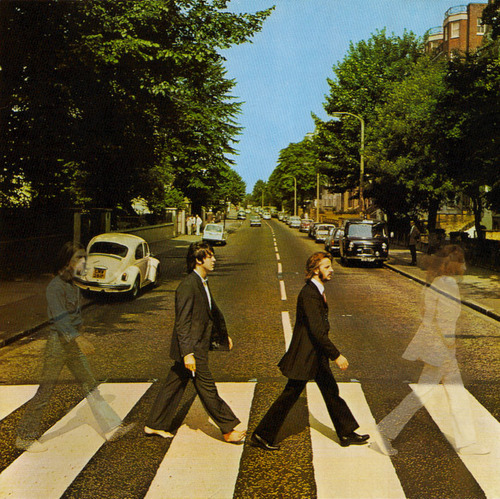
-------------------- -------------------------------- Mp3 of the month: Wild Things- Another Colored Ink Drawing (A.C.I.D.)
| |||||||
 P-O P-O #AnyoneButHarper  Registered: 05/13/09 Posts: 13,636 Loc: 
|
| ||||||

| |||||||
|
rainx Pilgrim  Registered: 07/31/11 Posts: 146 Loc: Seattle Last seen: 8 years, 9 months |
| ||||||
|
Great album. We awaited each new Beatle album's release...of course relaxing with the herb in the commune....then rapping about the meaning and listening to it again.
-------------------- "The Gospel of Sri Ramakrishna" is best source of insight into the self, universe, and the entheogen catalyzed experience. Forward by Aldous Huxley.
| |||||||
|
Learyfan It's the psychedelic movement! Registered: 04/20/01 Posts: 35,701 Loc: High pride! Last seen: 5 hours, 56 minutes |
| ||||||
|
Whoa, you lived in a 60's commune? That's intense. You should make a thread about your experiences there.

-------------------- -------------------------------- Mp3 of the month: Wild Things- Another Colored Ink Drawing (A.C.I.D.)
| |||||||
|
Le_Canard The Duk Abides  Registered: 05/16/03 Posts: 94,392 Loc: Earthfarm 1 
|
| ||||||
|
One of their best albums, to be sure. They really clicked on that one. Too bad they split up soon afterwards.

| |||||||
|
Learyfan It's the psychedelic movement! Registered: 04/20/01 Posts: 35,701 Loc: High pride! Last seen: 5 hours, 56 minutes |
| ||||||
|
Yeah it is. Well, at least we got what we got. Here's Abby Road in full.

-------------------- -------------------------------- Mp3 of the month: Wild Things- Another Colored Ink Drawing (A.C.I.D.)
Edited by Learyfan (09/25/14 08:10 PM)
| |||||||
|
Learyfan It's the psychedelic movement! Registered: 04/20/01 Posts: 35,701 Loc: High pride! Last seen: 5 hours, 56 minutes |
| ||||||
|
Annual bump.
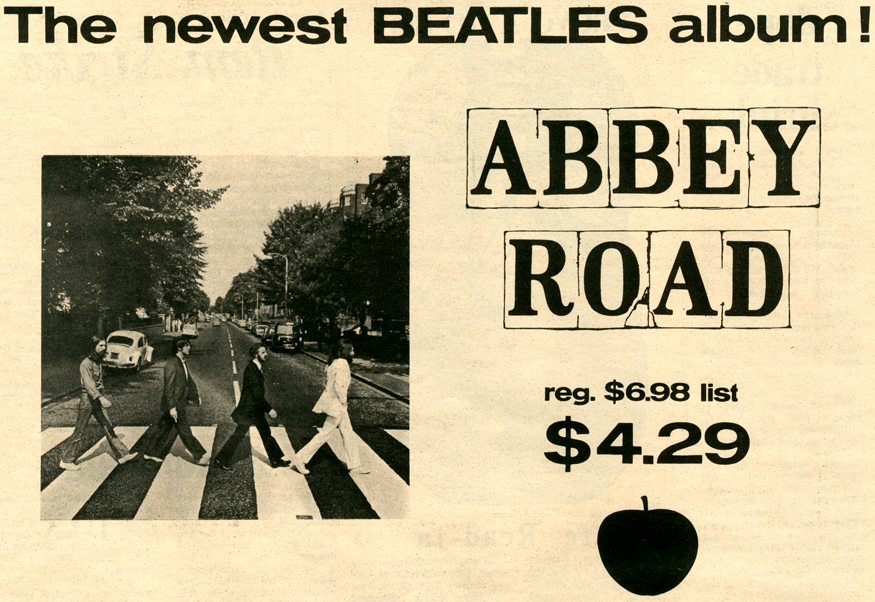
-------------------- -------------------------------- Mp3 of the month: Wild Things- Another Colored Ink Drawing (A.C.I.D.)
| |||||||
|
Learyfan It's the psychedelic movement! Registered: 04/20/01 Posts: 35,701 Loc: High pride! Last seen: 5 hours, 56 minutes |
| ||||||
|
45th anniversary of Abbey Road today.
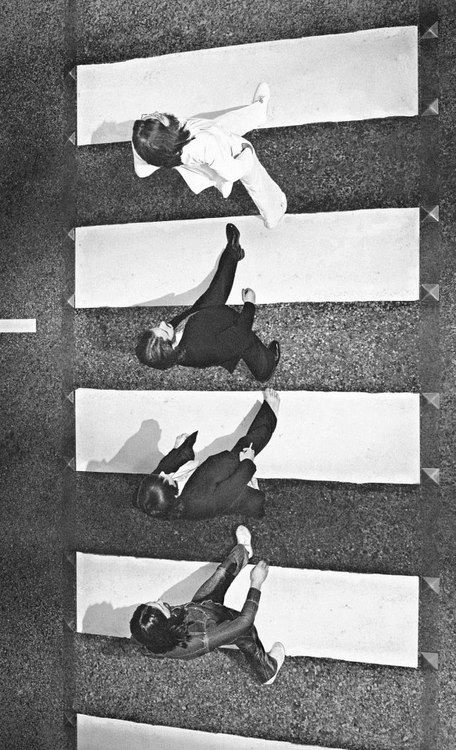
-------------------- -------------------------------- Mp3 of the month: Wild Things- Another Colored Ink Drawing (A.C.I.D.)
| |||||||
|
Dilsnique Admiral Admirable  Registered: 04/22/14 Posts: 3,800 Loc: Netherworld Last seen: 4 years, 1 month |
| ||||||
|
*climbs in thru bathroom window*
| |||||||
|
Legend RIP Sasha  Registered: 03/29/10 Posts: 28,336 Loc: TX
|
| ||||||
|
classsic.
-------------------- 
| |||||||
|
Learyfan It's the psychedelic movement! Registered: 04/20/01 Posts: 35,701 Loc: High pride! Last seen: 5 hours, 56 minutes |
| ||||||
|
Definitely.
-------------------- -------------------------------- Mp3 of the month: Wild Things- Another Colored Ink Drawing (A.C.I.D.)
| |||||||
|
Learyfan It's the psychedelic movement! Registered: 04/20/01 Posts: 35,701 Loc: High pride! Last seen: 5 hours, 56 minutes |
| ||||||
|
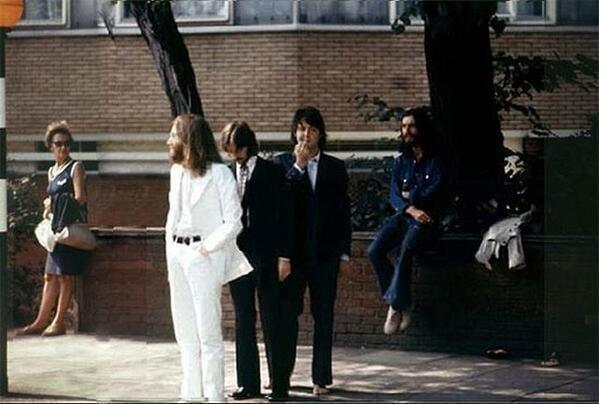
Annual bump.
-------------------- -------------------------------- Mp3 of the month: Wild Things- Another Colored Ink Drawing (A.C.I.D.)
| |||||||
|
Learyfan It's the psychedelic movement! Registered: 04/20/01 Posts: 35,701 Loc: High pride! Last seen: 5 hours, 56 minutes |
| ||||||
|
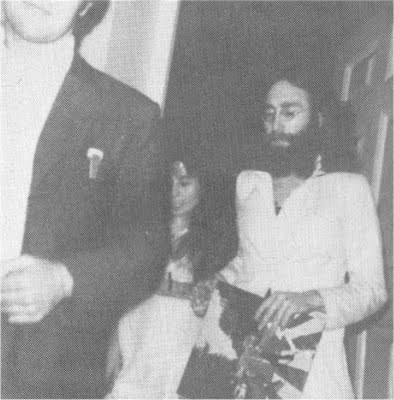
Annual bump.
-------------------- -------------------------------- Mp3 of the month: Wild Things- Another Colored Ink Drawing (A.C.I.D.)
| |||||||
|
Learyfan It's the psychedelic movement! Registered: 04/20/01 Posts: 35,701 Loc: High pride! Last seen: 5 hours, 56 minutes |
| ||||||
|
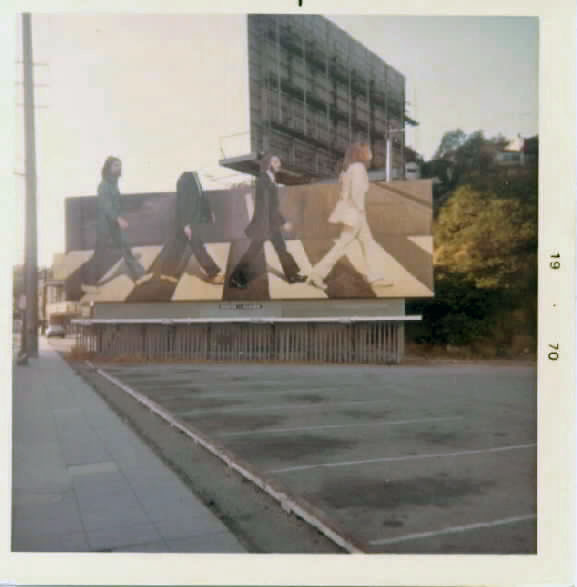
Annual bump.
-------------------- -------------------------------- Mp3 of the month: Wild Things- Another Colored Ink Drawing (A.C.I.D.)
| |||||||
|
Learyfan It's the psychedelic movement! Registered: 04/20/01 Posts: 35,701 Loc: High pride! Last seen: 5 hours, 56 minutes |
| ||||||
|
50th anniversary of the final album recorded by The Beatles today. Let It Be was recorded before and released after. Abbey Road was the end.
"And in the end. The love you take. Is equal to the love. You make." 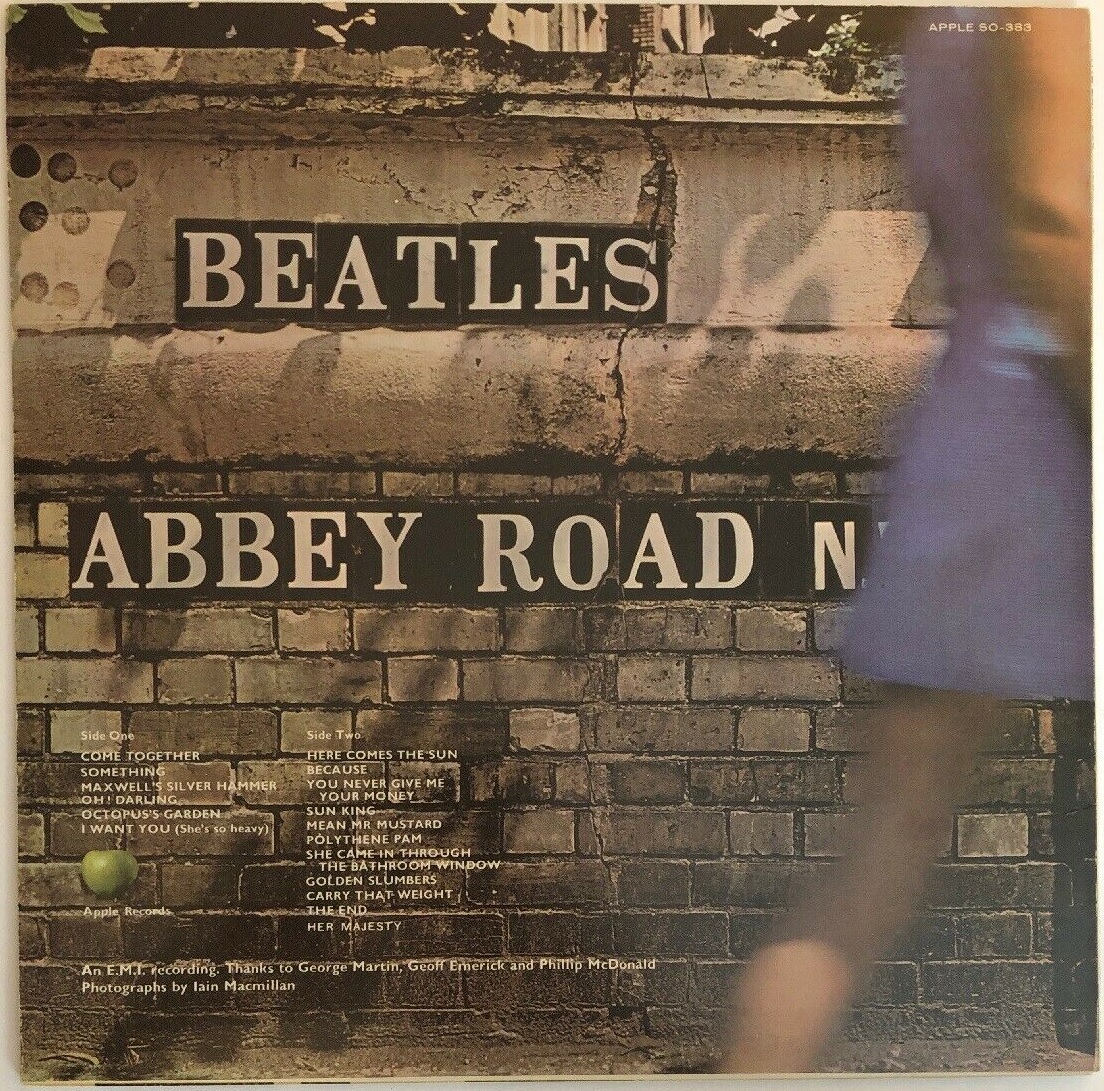
-------------------- -------------------------------- Mp3 of the month: Wild Things- Another Colored Ink Drawing (A.C.I.D.)
| |||||||
|
Learyfan It's the psychedelic movement! Registered: 04/20/01 Posts: 35,701 Loc: High pride! Last seen: 5 hours, 56 minutes |
| ||||||
|
Her Majesty's a pretty nice girl
But she doesn't have a lot to say Her Majesty's a pretty nice girl But she changes from day to day I want to tell her that I love her a lot But I gotta get a bellyful of wine Her Majesty's a pretty nice girl Someday I'm going to make her mine, oh yeah Someday I'm going to make her mine 
-------------------- -------------------------------- Mp3 of the month: Wild Things- Another Colored Ink Drawing (A.C.I.D.)
| |||||||
|
Learyfan It's the psychedelic movement! Registered: 04/20/01 Posts: 35,701 Loc: High pride! Last seen: 5 hours, 56 minutes |
| ||||||
|
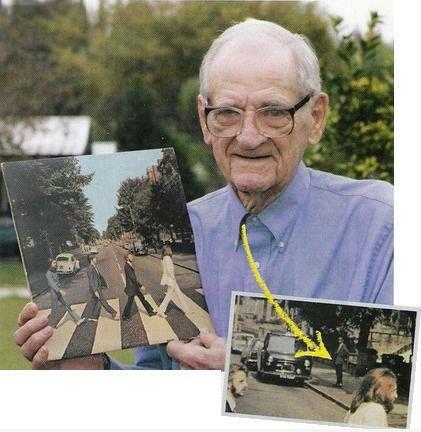
Annual bump.
-------------------- -------------------------------- Mp3 of the month: Wild Things- Another Colored Ink Drawing (A.C.I.D.)
| |||||||
|
animalsfyv Stranger Registered: 09/12/21 Posts: 182 Last seen: 4 years, 11 months |
| ||||||
|
I had a friend in college who was really into the Beatles. Once I was tripping and when She Came In Through The Bathroom Window came on I just had one of those whoa moments. That was my first time listening to that album.
| |||||||
|
Learyfan It's the psychedelic movement! Registered: 04/20/01 Posts: 35,701 Loc: High pride! Last seen: 5 hours, 56 minutes |
| ||||||
|
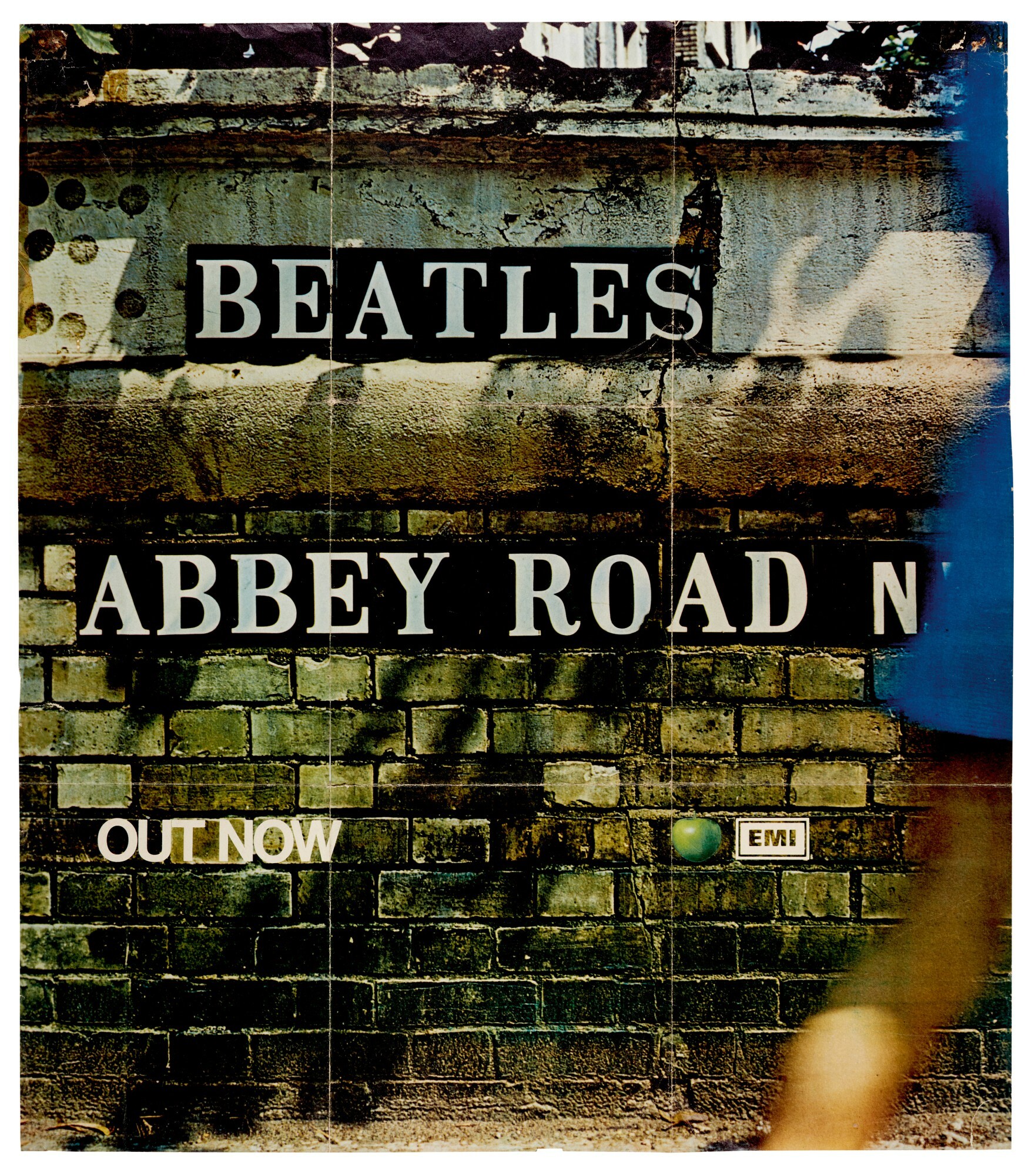
Annual bump.
-------------------- -------------------------------- Mp3 of the month: Wild Things- Another Colored Ink Drawing (A.C.I.D.)
| |||||||
| |||||||


 Edit
Edit  Reply
Reply 


| Shop: Spores for European Microscopy Golden Teacher Liquid Culture For Sale North Spore Mushroom Grow Kits & Cultivation Supplies Unfolding Nature: Being in the Implicate Order Bulk Cannabis Seeds |
|
| Similar Threads | Poster | Views | Replies | Last post | ||
 |
 |
Today in counterculture history (09/23) (  1 2 all ) 1 2 all ) |
 Learyfan Learyfan |
1,430 | 24 | 09/23/26 05:03 AM by Learyfan |
|
|
Today in counterculture history (09/25) ( 1 2 all ) |
Learyfan |
977 | 21 | 09/25/26 05:03 AM by Learyfan |
|
|
Today in counterculture history (09/20) ( 1 2 all ) |
Learyfan |
1,743 | 21 | 09/20/26 05:27 PM by Learyfan |
|
 |
The History of the Shroomery. |  PrisonSong PrisonSong |
2,416 | 7 | 05/03/05 06:52 PM by PrisonSong |
|
|
Acid History Question : Where did Al Hubbard get his LSD? ( 1 2 3 all ) |
 freddurgan freddurgan |
11,883 | 43 | 04/25/15 08:39 AM by Freakdaddy |
|
|
Wanted: Complete history of Psilocybe cubensis cultivation. ( 1 2 all ) |
 Baby_Hitler Baby_Hitler |
7,053 | 26 | 12/17/12 04:51 AM by koraks |
|
|
France awaits biggest child sex abuse case in its legal history. |  Bi0TeK Bi0TeK |
763 | 2 | 07/26/05 10:38 PM by Bi0TeK |
|
|
UPDATE on the Europe Gathering 2005 ( 1 2 3 4 5 6 all ) |
 stefan stefan |
15,517 | 110 | 04/03/05 03:12 AM by stefan |
| Extra information | ||
| You cannot start new topics / You cannot reply to topics HTML is disabled / BBCode is enabled Moderator: Entire Staff 1,584 topic views. 4 members, 15 guests and 158 web crawlers are browsing this forum. [ Show Images Only | Sort by Score | Print Topic ] | ||
