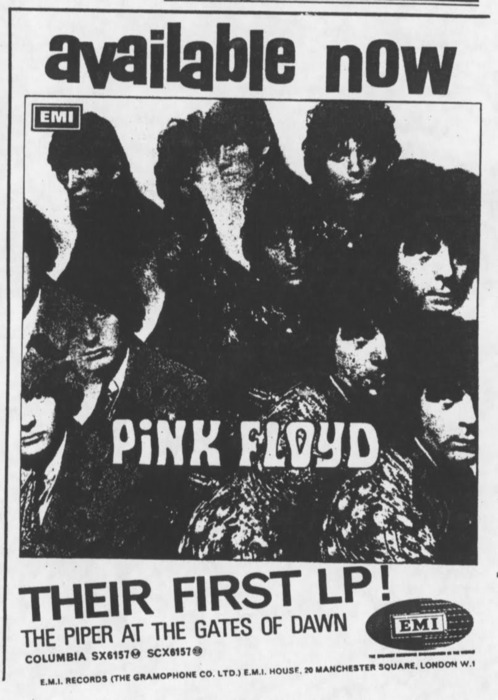
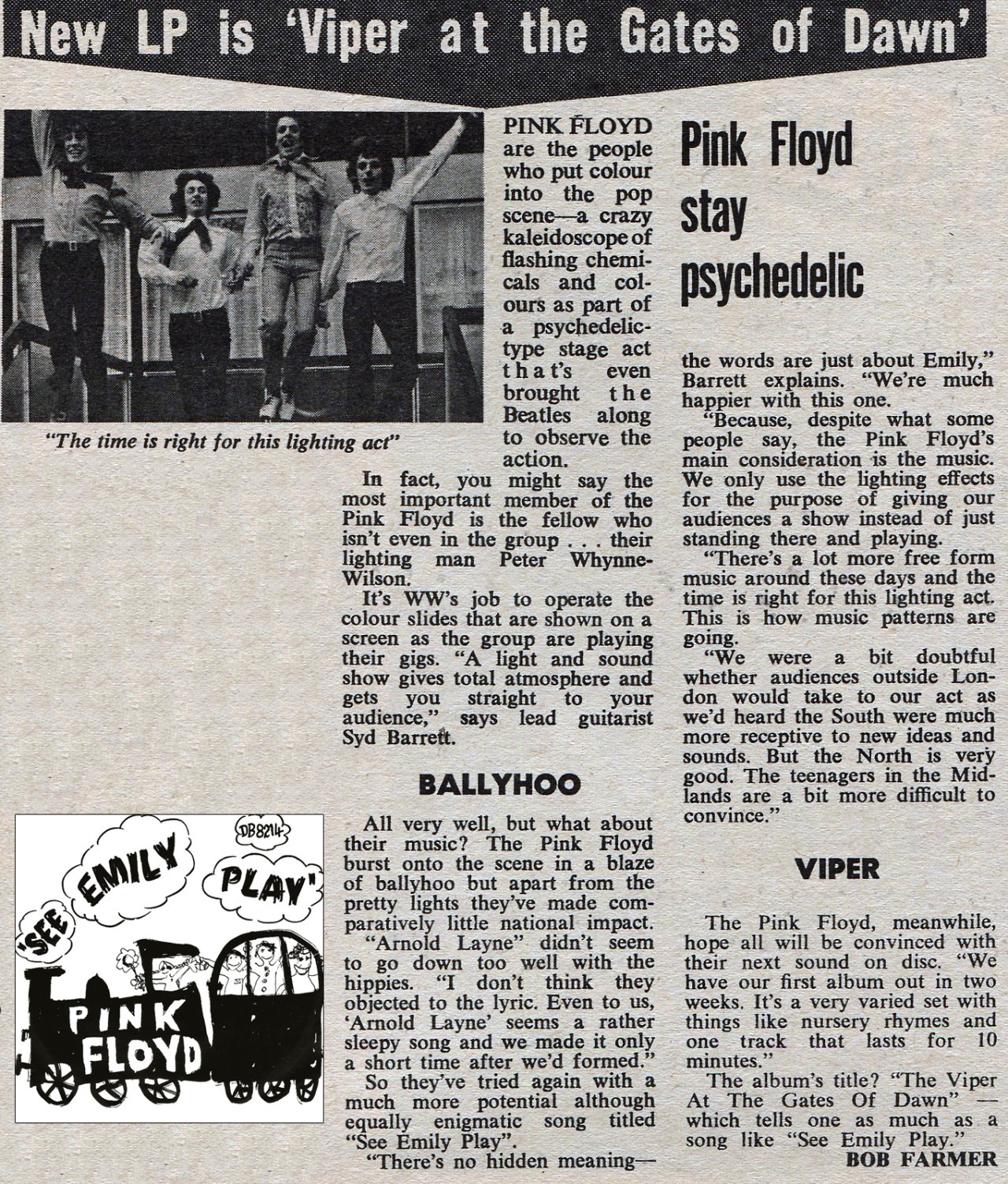
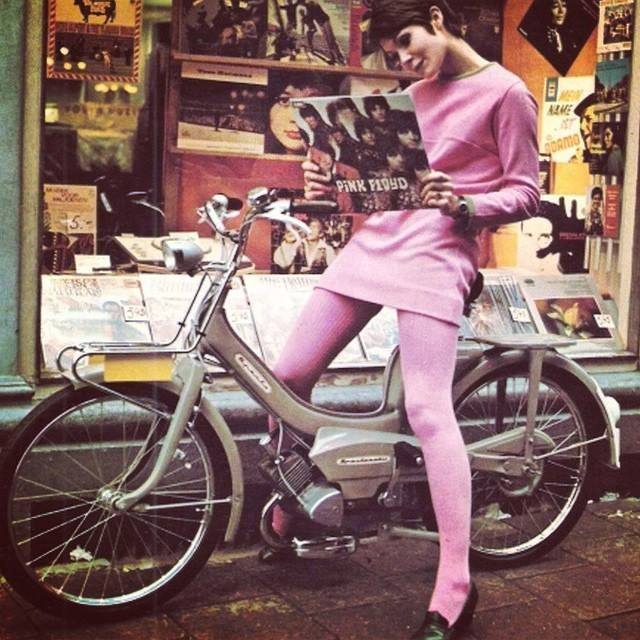
- 1967: Pink Floyd release their debut album The Piper At The Gates Of Dawn
Quote:
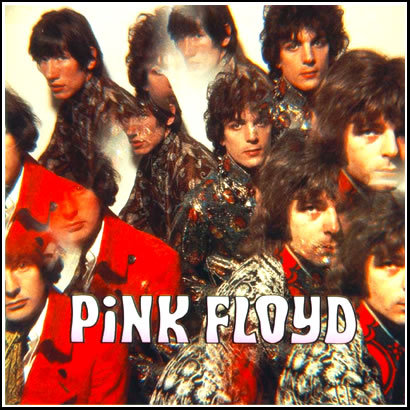
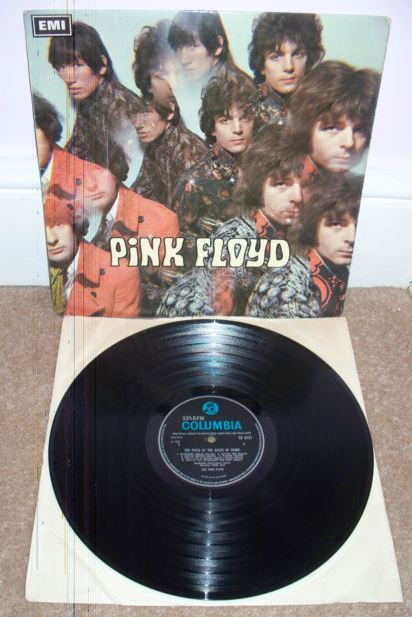
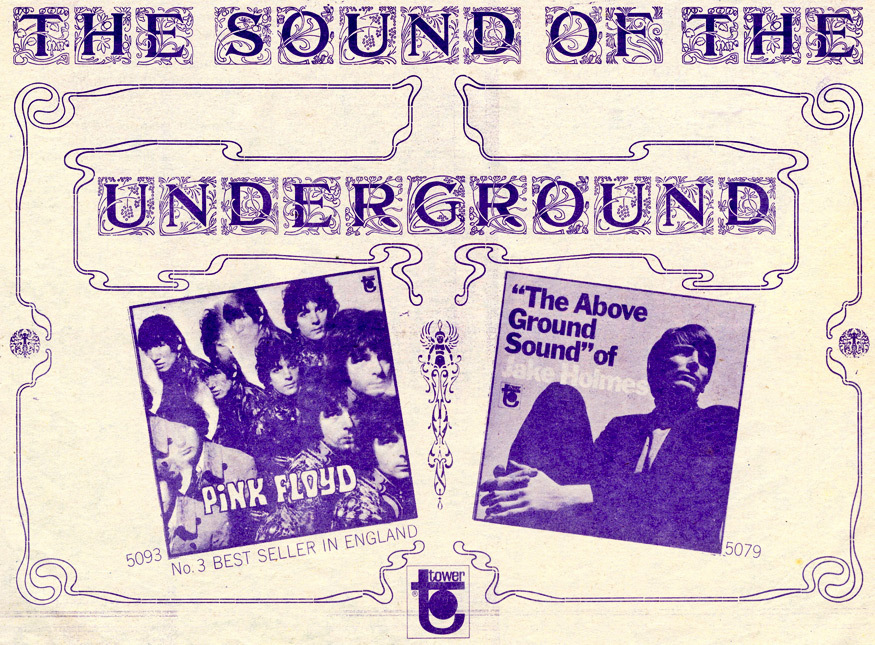
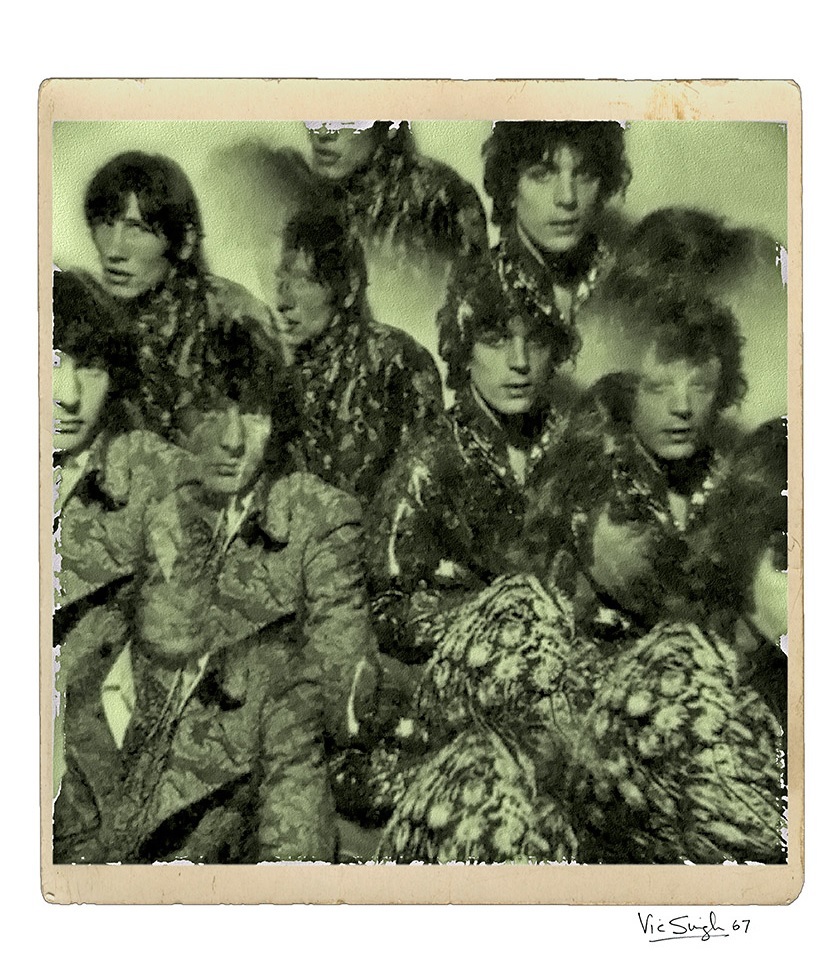
The Piper at the Gates of Dawn is the debut album by the English rock band Pink Floyd, and the only one made under founding member Syd Barrett's leadership. The album, named after the title of chapter seven of Kenneth Grahame's The Wind in the Willows and featuring a kaleidoscopic cover photo of the band taken by Vic Singh, was recorded from February to May 1967 and released on 5 August 4 August 1967. It was produced by Beatles engineer Norman Smith and released in 1967 by EMI Columbia in the United Kingdom and Tower in the United States, in August and October respectively.
The release of the album in the US was timed with the band's tour of the US. In the UK, no singles were released from the album, but in the US "Flaming" was offered as a single. The US version of the album has a rearranged track list, and contains the UK non-album single, "See Emily Play". Two of the album's songs, "Astronomy Domine" and "Interstellar Overdrive", became long-term mainstays of the band's live set list, while other songs were performed live only a handful of times.
Since its release, the album has been hailed as one of the best psychedelic rock albums. In 1973, it was packaged with the band's second album, A Saucerful of Secrets, and released as A Nice Pair to introduce new fans to the band's early work after the success of The Dark Side of the Moon. Special limited editions of The Piper at the Gates of Dawn were issued to mark its thirtieth and fortieth anniversaries in 1997 and 2007, respectively, with the latter release containing bonus tracks. In 2012, The Piper at the Gates of Dawn was voted 347th on Rolling Stone magazine's list of the "500 Greatest Albums of All Time".
Background
Architecture students Roger Waters, Nick Mason and Richard Wright and art student Syd Barrett had performed under various group names since 1962, and began touring as "The Pink Floyd Sound" in 1965. They turned professional on 1 February 1967 when they signed with EMI, with an advance fee of £5,000. Their first single, a song about a kleptomaniac transvestite titled "Arnold Layne", was released on 11 March to mild controversy, as Radio London refused to air it.
About three weeks later, the band were introduced to the mainstream media. EMI's press release claimed that the band were "musical spokesmen for a new movement which involves experimentation in all the arts", but EMI attempted to put some distance between them and the underground scene from which the band originated by stating that "the Pink Floyd does not know what people mean by psychedelic pop and are not trying to create hallucinatory effects on their audiences." The band returned to Sound Techniques studio to record their next single, "See Emily Play", on 18 May. The single was released almost a month later, on 16 June, and reached number six in the charts.
Pink Floyd picked up a tabloid reputation for making music for LSD users. The popular broadsheet News of the World printed a story nine days before the album's recording sessions began, saying that "The Pink Floyd group specialise in 'psychedelic music', which is designed to illustrate LSD experiences." Contrary to this image, only Barrett was known to be taking LSD; authors Ray B. Browne and Pat Browne contend that he was the "only real drug user in the band".
Recording history
Recording of the album began on 21 February 1967 in studio three of EMI Studios, at the same time that The Beatles were recording Sgt. Pepper's Lonely Hearts Club Band. The album was produced by Norman Smith, an EMI staff member who had previously engineered all of the Beatles' recordings up to 1965's Rubber Soul. Smith would go on to produce Pink Floyd's follow up album, A Saucerful of Secrets. "Interstellar Overdrive" and "Matilda Mother" were two of the first tracks recorded, as the latter was viewed as a potential single. An early, unoverdubbed, shortened mix of the album's "Interstellar Overdrive" was used for a French EP release that July. In April, the band recorded both "Percy the Rat Catcher" (this would later be called "Lucifer Sam"), and a currently unreleased track called "She Was a Millionaire." At some point during the album's creation, Nick Mason recalled that the group was ushered into Studio Two, where the Beatles were recording "Lovely Rita". Several conflicting views surround how efficiently the recording of the album actually went. In his book Inside Out: A Personal History of Pink Floyd, Nick Mason recalled that the sessions went smoothly and that the whole process was extremely efficient. Norman Smith, however, condemned both the album's recording and the band members' musical abilities. Smith later stated that the sessions were "sheer hell." Both "The Gnome" and "The Scarecrow" were recorded in one take. Indeed a large proportion of the album is credited solely to Barrett, with tracks such as "Bike" having been written in late 1966 before the album was even started. "Bike" was originally titled "The Bike Song," and it was recorded on 21 May 1967. The last recording session took place on 5 July 1967, with the track "Pow R. Toc H." being one of the last songs added to the album.
Album cover and title
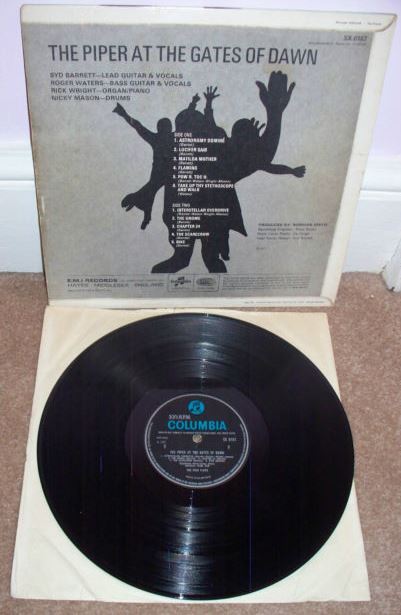
Vic Singh photographed and designed the album cover. The back cover features a silhouette drawing of the band done by Barrett himself.
The album's title comes from the title of Chapter Seven, "The Piper at the Gates of Dawn", of Kenneth Grahame's The Wind in the Willows, where Rat and Mole, while searching for Portly, the lost son of Otter, are drawn to a place where the piper is playing on his reed flute. (The piper referred to is the Greek god Pan.)
Reception
At the time of its release, the album was received positively. In subsequent years, the record has been recognised as one of the seminal psychedelic rock albums of the 1960s. In 1967, both Record Mirror and NME gave the album four stars out of five. Record Mirror commented that "the psychedelic image of the group really comes to life on this LP, which is a fine showcase for both their talent and the recording technique. Plenty of mindblowing sound." Cash Box called it a "striking collection of driving, up to date rock ventures." Paul McCartney and Pink Floyd's past producer Joe Boyd, both rated the album highly. Some, notably Pete Townshend, voiced the opinion of the underground fans, by suggesting that the album did not reflect the band's live performances. In recent years the album has gained even more recognition. In 1999 Rolling Stone Magazine gave the album 4.5 stars out of 5, calling it "the golden achievement of Syd Barrett". Q Magazine described the album as "indispensable," and included it in their best psychedelic albums of all time. It was also ranked 40th in Mojo magazines, The 50 Most Out There Albums of all Time. In 2000 Q magazine placed The Piper at the Gates of Dawn at number 55 in its list of the 100 Greatest British Albums Ever. In 2003, the album was ranked number 347 on Rolling Stone magazine's list of the 500 greatest albums of all time. Digital Dream Door also ranked The Piper at the Gates of Dawn #2 on the "100 Greatest Psychedelic Albums" list. The album was named as one of Classic Rock magazine's "50 Albums That Built Prog Rock".
Track listing
All songs written by Syd Barrett, except where noted.
Side one
1. "Astronomy Domine" Barrett and Richard Wright 4:12
2. "Lucifer Sam" Barrett 3:07
3. "Matilda Mother" Wright and Barrett 3:08
4. "Flaming" Barrett 2:46
5. "Pow R. Toc H." (Barrett, Roger Waters, Wright, Nick Mason) Barrett and Waters 4:26
6. "Take Up Thy Stethoscope and Walk" (Waters) Waters 3:05
Side two
1. "Interstellar Overdrive" (Barrett, Waters, Wright, Mason) Instrumental 9:41
2. "The Gnome" Barrett 2:13
3. "Chapter 24" Barrett 3:42
4. "Scarecrow" Barrett 2:11
5. "Bike" Barrett 3:21
(https://en.wikipedia.org)
4 August 1967
Pink Floyd's debut album The Piper At The Gates Of Dawn was released in the UK. The album reached No. 6 in the charts.
(http://www.pinkfloyd.com)
- 1968: Day 2 of the 1968 Newport Pop Festival takes place
Quote:
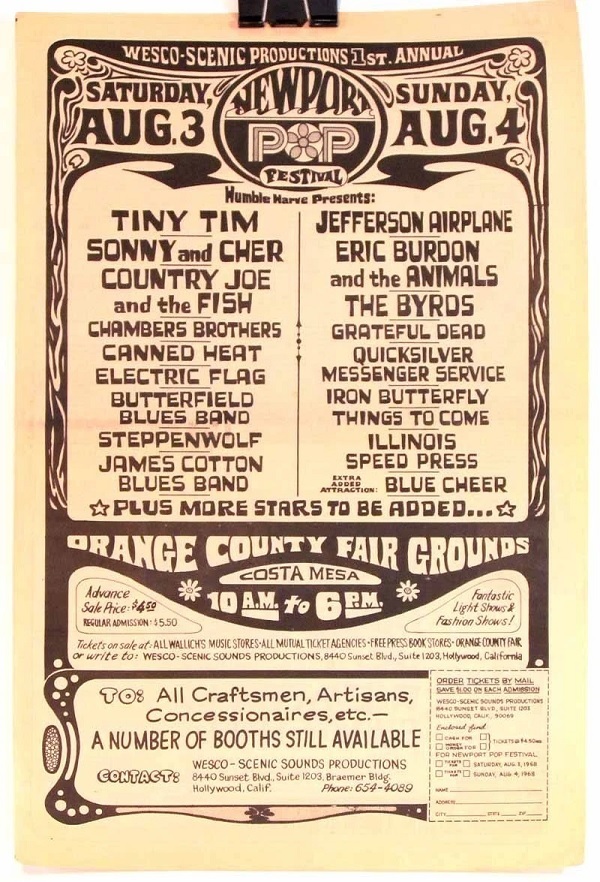
The Newport Pop Festival, held in Costa Mesa, California, on August 3–4, 1968, was the first music concert ever to have more than 100,000 paid attendees. Its sequel, billed as Newport 69, was held in Northridge, California, on June 20–22, 1969, and had a total attendance estimated at 200,000.
History
There were two separate events staged in the late 1960s that are commonly referred to as the "Newport Pop Festival." The first was called the Newport Pop Festival, held at the Orange County Fairgrounds in Costa Mesa, California, on the weekend of August 3–4, 1968. The second event was originally billed as "Newport 69," and was held over the three-day weekend of June 20–22, 1969 in Northridge, California, at Devonshire Downs. In published writings over the last 40 years, this latter event has been referred to as the "Newport 69 Pop Festival," the "Newport Pop Festival 1969" or simply the "Newport Pop Festival." Subsequently, much confusion has been created over the years between the 1968 and 1969 events. Some of this confusion was generated by the participating musicians themselves who, in later interviews, often mixed up the two events.
The latter event was organized by Mark Robinson (age 25), who was one of the three promoters of the original Newport Pop Festival in 1968. The other two promoters of the '68 event were Gary R. Schmidt (age 26) and his father Al Schmidt.[citation needed] Al was not a rock 'n' roller, but rather an entrepreneurial businessman who helped with the money and licensing. There was a brief lawsuit between the two Schmidts and Robinson just prior to the "Newport 69" show, which the Schmidts had declined to be involved in because of the cost of the acts. The entire band budget for the '68 show was under $50,000, while Robinson paid Jimi Hendrix alone $50,000 for the '69 event.[citation needed] This was an amount of money unheard of at that time for a rock act. The '68 show made money and the '69 show did not.[citation needed] The lawsuit was over trade names and, within the last few days before the '69 show, the court ordered that Robinson had to use "not affiliated with the Newport Pop Festival" disclaimers in advertising. Otherwise, he would not have been able to stage a "Newport 70" show using that name. A round flyer with the dimensions of a 45RPM record was used to promote the 1968 Costa Mesa show and is included in "The Art of Rock," a publication of 1960s and 1970s poster art. This flyer has sold on eBay for as much as $500.
The Newport Pop Festival 1968
The first Newport Pop Festival was held at the Orange County Fairgrounds in Costa Mesa, California, on the weekend of August 3–4, 1968. It is believed to have been the first pop music concert with over 100,000 paid attendees.
The 1968 event was originally scheduled to be held inside the Orange County Fairgrounds in an outdoor pavilion. The fairgrounds are on Newport Boulevard, just a short distance from Newport Beach (hence the name). The 1968 event's advance ticket sales were triple of what was expected, and it became evident that no area inside the fairgrounds could hold even 25,000 people, let alone the near 100,000 now predicted. In the last three days before the show, it was moved to one of the adjoining parking lots of the fairgrounds. Fencing, staging, sanitation, and food concessions had to be organized within just three days. Fencing in some areas consisted of wire blankets and/or tarps thrown over as a visual block. People without tickets on the outside would "storm the fence" and got in for free. None of the commercial concessionaires were prepared for the event, and they all ran out of food and drink halfway through the first day. Water was provided throughout the event by garden hoses from inside the fairgrounds, but attendees had to provide their own containers and give up their viewing spot to reach the water. A broken water supply pipe provided a mud bath that a number of people jumped in, but people realized that the sun would bake the mud into a hard cover, so they stopped. There were plenty of porta-potties available at the rear of the hastily assembled "grounds." There was no shade in the primary viewing area, and partiers were sunburned. The weather was a typical August day in sunny Southern California. Those without hotel reservations had no place to stay. Fortunately, city officials alleviated some of the problems by designating a 32-acre (130,000 m2) area of the fairgrounds as an emergency campsite. They also brought in portable toilets and water tanks. This particular event launched some of the problems rock festival promoters would face in the future.
Harvey "Humble Harve" Miller, a Top 40 disc jockey for 93 KHJ-AM in Los Angeles, was hired to promote the show and hosted the event with Wavy Gravy. Wesco Productions (West Coast Productions) consisted of Mark Robinson, Gary Schmidt and Al Schmidt, though Humble Harv was used in advertising for promotional purposes. Tom Neito of Scenic Sounds Productions also assisted in securing the fairgrounds, and was paid a fee and received some promotional billing. Robinson had been involved with Bob Blodget in staging a much smaller but similar weekend festival in 1967 in Los Angeles.[1] There never was a second edition of this event and its prominence faded from memory until, on August 4, 2008, Jeff Overley penned a feature article for the Orange County Register [2] that commemorated the event's 40th anniversary.
The big hits with the crowd included Tiny Tim, Jefferson Airplane, Country Joe McDonald, The Chambers Brothers, and Steppenwolf.
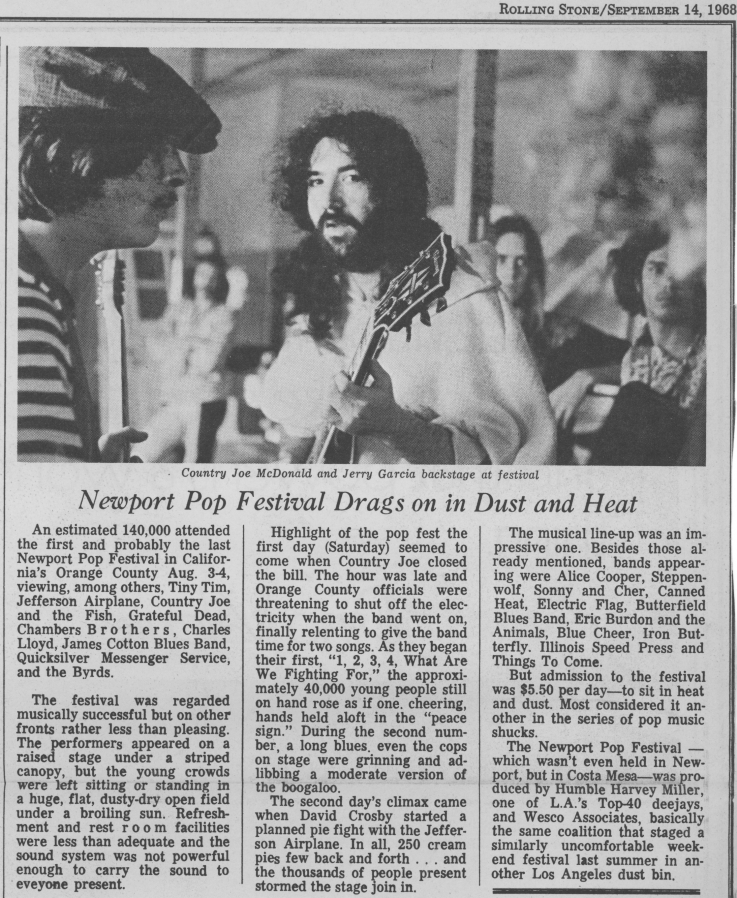
The 1968 event attracted much media attention at the time. Rolling Stone Magazine published an article on the event in its September 14, 1968 edition, writing:
Newport Pop Festival Drags on in Dust and Heat: Dead, Country Joe, Crosby, pie fight weekend's highlights
An estimated 140,000 attended the first and probably the last Newport Pop Festival in California's Orange County Aug. 3-4, viewing, among others, Tiny Tim, Jefferson Airplane, Country Joe and the Fish, Grateful Dead, Chambers Brothers, Charles Lloyd, James Cotton Blues Band, Quicksilver Messenger Service, and the Byrds.
The festival was regarded musically successful but on other fronts rather less than pleasing. The performers appeared on a raised stage under a striped canopy, but the young crowds were left sitting or standing in a huge, flat, dusty-dry open field under a broiling sun. Refreshment and rest room facilities were less than adequate and the sound system was not powerful enough to carry the sound to everyone present.
The highlight of the pop fest on the first day (Saturday) seemed to come when Country Joe closed the bill. The hour was late and Orange County officials were threatening to shut off the electricity when the band went on, finally relenting to give the band time for two songs. As they began their first, "1, 2, 3, 4, What Are We Fighting For," the approximately 40,000 young people still on hand rose as if one, cheering, hands held aloft in the "peace sign." During the second number, a long blues, even the cops on stage were grinning and adlibbing a moderate version of the boogaloo.
The second day's climax came when David Crosby started a planned pie fight with Jefferson Airplane. In all, 250 cream pies flew back and forth ... and the thousands of people present stormed the stage to join in.
The musical line-up was an impressive one. Besides those already mentioned, bands appearing were Alice Cooper, Steppenwolf, Sonny and Cher, Canned Heat, Electric Flag, Butterfield Blues Band, Eric Burdon and the Animals, Blue Cheer, Iron Butterfly, Illinois Speed Press and Things to Come.
But admission to the festival was $5.50 per day – to sit in heat and dust. Most considered it another in the series of pop music shucks.
The Newport Pop Festival – which wasn't even held in Newport, but in Costa Mesa – was produced by Humble Harvey Miller, one of L.A.'s Top-40 DJs, and Wesco Associates, basically the same coalition that staged a similarly uncomfortable weekend festival last summer in another Los Angeles dust bin.
Among other highlights that concert-goers recall were when helicopters flew overhead, dropping flowers on the audience. And on Sunday, Sonny and Cher arrived by helicopter and were later booed off the stage.
Bands performing at the Festival:
Sunday, August 4, 1968
Blue Cheer, Eric Burdon & the Animals, Grateful Dead, Illinois Speed Press, Iron Butterfly, Jefferson Airplane, Quicksilver Messenger Service, The Byrds, Things to Come.
Bands that may have performed at the festival
Lovin' Spoonful, Rhinoceros, Sky Pilot and The Turtles were not listed on the official poster for the event, but there is published evidence indicating these bands may have played at the festival.
The 1969 festival was intended to be the successor to the Orange County event, hoping to capitalize on the brand name and market momentum generated in 1968. Unfortunately, a move of venue was necessary because the 1968 event had fallen in disfavor with local community leaders. Three days after the 1968 event, the Costa Mesa City Council vowed to prevent a Newport Pop Festival encore. "To say that we would not like it back here would be the understatement of the year," said Costa Mesa Mayor Alvin Pinkley.
(https://en.wikipedia.org)
- 1972: Timothy Leary is ordered to leave Switzerland by October 31st
Quote:
Drug cultist indicted for international trade
United Press International
SANTA ANA, Calif. — Dr. Timothy Leary was one of 29 persons named yesterday in a secret grand jury indictment involving a multi million dollar international trade in LSD and hashish.
Orange County District Attorney Cecil Hicks said an estimated 57.9 million in hallucinogenic drugs had been confiscated in raids in Northern and Southern California, Hawaii and Oregon.
Hicks said the raids by county, state and federal narcotics officers were made in conjunction with an indictment handed down by the Orange County grand jury earlier this week accusing the Brotherhood of Eternal Love, an organization with which Leary was connected, of conducting an international drug trade.
Leary. 51, once was regarded as the high priest of the hallucinatory drug cult in the United States. After experimenting with the drug at Harvard, he urged young people to "tune in, turn on and drop out."
He was serving a 10-year sentence for marijuana smuggling at the California Men's Colony near San Luis Obispo when he escaped in September 1970 and fled the country. Leary and his wife Rosemary lived in Algeria and then in Switzerland.
The Swiss government said Friday it had ordered Leary to leave that country by Oct. 31, because his views on drugs made him an undesirable influence.
Hicks said a warrant had been issued for Leary's arrest and bail for him set at $5 million.
Twelve other persons named in the indictment were arrested in a series of early morning raids, including one at the ranch owned by the Brotherhood of Eternal Love in Idyllwild, Calif.
Hicks said the brotherhood was an offshoot of the League of Spiritual Discovery cult founded by Leary.
Ninety others were named in the indictment as co-conspirators, Hicks said.
He said 1.5 million LSD tablets, 30 gallons of hashish oil and 21/2 tons of hashish were netted in the raids.
(Arizona Republic (Phoenix, Arizona), 06 Aug 1972, Sun, [First Edition], Page 13)
- 1980: The John W. Holton LSD and MDA lab is busted
Quote:
Two May Face Other Charges From Drug Raid
A federal narcotics agent said further charges are being studied in the arrests of two men in connection with operation of an alleged lysergic acid (LSD) laboratory in Colerain Township.
The pair, arrested at their homes by federal, state and local police Monday night, are James C. Stevens, 32, 10972 Hughes Rd., and John Holton, 28, 5794 Princeton-Glendale Pike, Maustown, Butler County.
Each is charged with with possession with intent to distribute drugs, the agent, who identified himself as L. Stewart of the Drug Enforcement Administration (DEA),said.
Stewart said the arrests stemmed from surveillance after DEA agents received information that chemicals were being delivered to Holton at his home. The investigation led agents to the home of Stevens and after observing both men, the raids were staged.
The federal drug agent said Steven's dwelling housed a laboratory to synthesize LSD. Authorities estimated the value of the drugs seized in at about $40,000.
(The Cincinnati Enquirer Cincinnati Ohio 7 Aug 1980 Thu Page 29)
Butler Countian Faces Three Drug Counts
A Butler County man has been indicted by a Cincinnati federal grand jury on three counts of attempting to manufacture LSD, MDA and methaqualone.
John W. Holton, 26, 5794 Princeton-Glendale Pk., Maustown, faces arraignment Sept. 8 before U.S. District Judge S. Arthur Spiegel following his indictment Thursday. He is tree under $5,000 surety bond.
Meanwhile, U.S. Magistrate J. Vincent Aug Jr. has dismissed a complaint against James C. Stevens, 32, 10972 Hughes Rd.,Colerain Township, who was arrested Aug. 4 [1980] in the same case.
Federal, state and local law officers raided Stevens' home that night and found what they called a "major clandestine drug laboratory." Authorities estimated the value of drugs seized on the raid at $40,000.
Federal sources indicated that the complaint was dismissed against Stevens because he was merely the landlord. He had rented out the space in his home where the laboratory was located.
(The Cincinnati Enquirer (Cincinnati, Ohio), 03 Sep 1980, Wed, Page 26)

Edited by Learyfan (08/02/20 10:41 AM)
|

 Threaded
 Previous
 Index
Index Next
Next Golden Teacher Liquid Culture For Sale
  Cultivation Supplies
  Mono Tub Substrate
  USA West Coast Strains
 Some of these posts are very old and might contain outdated information. You may wish to search for newer posts instead.
 Learyfan


 Edit
Edit  Reply
Reply 











 Learyfan
 1 2 all )
 Rose
Rose
 Zoso_UK
 ding
ding Annom
Annom
